Washington Square Historic District (Boundary Increase)

Why it's listed
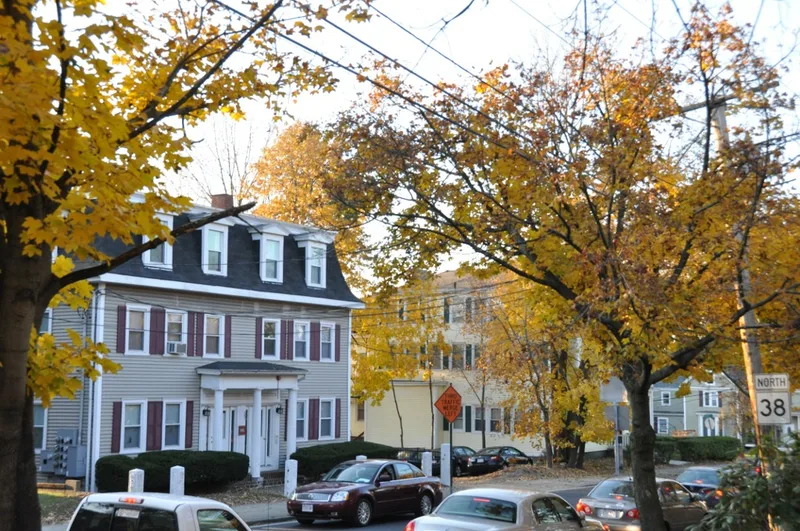
Four multi-family houses at 140-160 Andover Street in Lowell's Belvidere neighborhood were added to the Washington Square Historic District in 1999. Built between about 1860 and 1895, they include a Second Empire double house with a mansard roof, an Italianate double house with a front gable, and two later flat-roofed apartment buildings with Queen Anne, Craftsman and Colonial Revival details. The district grew out of an 1832 subdivision by Thomas and John Nesmith, laid out around a small park by landscape architect Alexander Wadsworth on land once part of Judge Edward Livermore's estate. The Andover Street buildings stood just outside the original plan but followed the same pattern of development. Builders and owners included a banker, boot and shoe manufacturers and mill workers. The group reflects the move from single-family houses to two-family dwellings and small apartment houses as land values rose. The additions were judged significant for architecture and community development, and the area may also hold archaeological remains.
Machine-generated summary. This summary was generated by a language model from the official nomination document and has not been reviewed line by line by an editor. It may contain errors. Check the source document before relying on any detail. Source: nomination document (PDF) · catalog entry. Generated October 2026 (model claude-sonnet-5-5, prompt v1.0-2026-10-29).
| Period of significance | 1800-1899 |
|---|---|
| Styles | Second Empire, Italianate, Queen Anne/Craftsman and Italianate/Colonial Revival detailing |
| Areas of significance | Architecture, Community Planning and Development |
| Acreage | 2 |
| Boundary source | NPS cultural-resource GIS polygon |
| Full listing page | Washington Square Historic District (Boundary Increase) (property record) |
What listing means for this property
This is a historic district. Buildings within its boundary are either contributing (they add to the district's significance) or non-contributing. Owners of contributing income-producing buildings can claim the 20% federal rehabilitation tax credit; homeowners should look at state credits. National Register districts impose no design review by themselves; a local historic district ordinance, if one exists, does (the difference explained).
General information, not legal or tax advice. Rules change; confirm with your State Historic Preservation Office or a qualified adviser.