Ware Center Historic District

Why it's listed
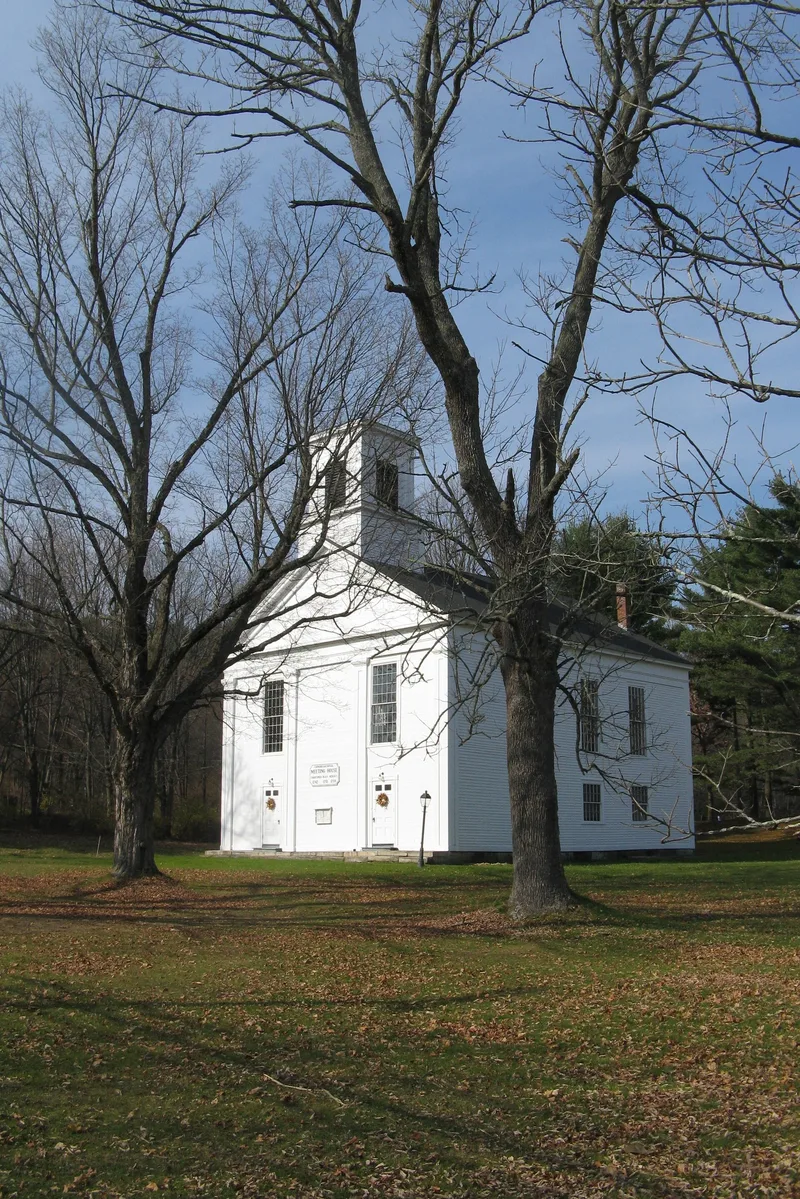
Ware Center is a linear village of about 20 inventoried properties along Route 9 in Ware, Massachusetts, between two drumlins. It grew around the First Congregational Meeting House, first sited in 1750 near the geographic center of town and rebuilt in 1799. It was remodeled in the Greek Revival style in 1843. Near the church are the 1872 school, later a Grange hall, and the Pepper-Gould Tavern. Farmhouses and residences, some built for ministers, spread out from there in Georgian, Federal and Greek Revival forms. Fields, stone walls and a lane of sugar maples preserve the rural setting. The village lost its central role in the 1820s to 1840s, when large-scale manufacturing in Ware Village drew away the parish and town functions. Little new building followed, and modern houses mostly stand on older sites. The district was listed for its architecture and for its role in the town's local history.
Machine-generated summary. This summary was generated by a language model from the official nomination document and has not been reviewed line by line by an editor. It may contain errors. Check the source document before relying on any detail. Source: nomination document (PDF) · catalog entry. Generated October 2026 (model claude-sonnet-5-5, prompt v1.0-2026-10-29).
| Styles | Vernacular Georgian, Federal and Greek Revival, with some Victorian eclectic and Colonial Revival |
|---|---|
| Areas of significance | Community Planning and Development, Architecture, Social History |
| Acreage | 80 |
| Boundary source | NPS cultural-resource GIS polygon |
| Full listing page | Ware Center Historic District (property record) |
What listing means for this property
This is a historic district. Buildings within its boundary are either contributing (they add to the district's significance) or non-contributing. Owners of contributing income-producing buildings can claim the 20% federal rehabilitation tax credit; homeowners should look at state credits. National Register districts impose no design review by themselves; a local historic district ordinance, if one exists, does (the difference explained).
General information, not legal or tax advice. Rules change; confirm with your State Historic Preservation Office or a qualified adviser.