Ventfort Hall

Why it's listed
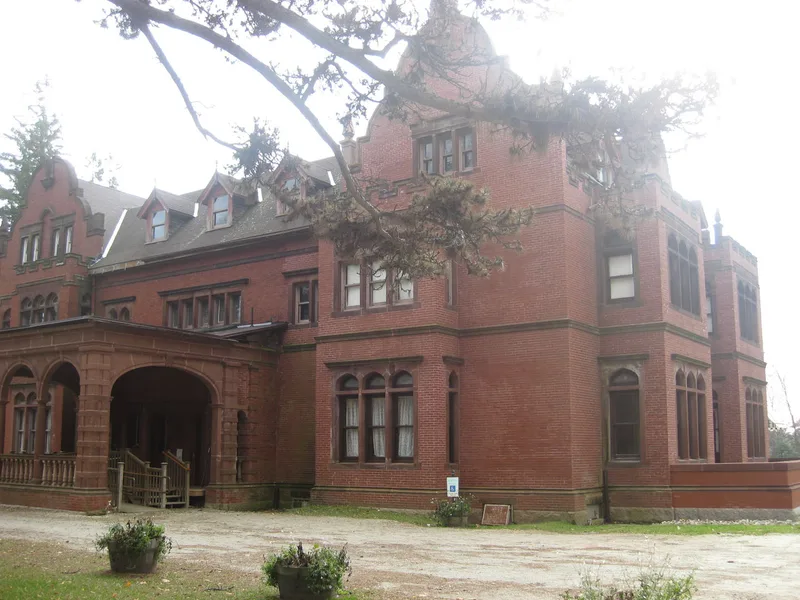
Ventfort Hall is a large brick summer mansion in Lenox, Massachusetts, built in 1893 for New York banker George Halle Morgan. Designed by the Boston firm of Rotch and Tilden in the Jacobethan Revival style, it has stepped Flemish gables, redstone trim, tall chimneys and abundant stained glass. The 12.5-acre nominated property also holds a carriagehouse/stable and two gatehouses by the same architects, plus remnants of rose gardens and terraced lawns. Inside, a two-story oak-paneled hall with a carved staircase leads to a ballroom, library and richly finished reception rooms and bedroom suites. The house was built on the site of an earlier 1870 villa and reflects the period when wealthy New Yorkers and New Englanders made Lenox a Berkshire resort nicknamed the Inland Newport. The estate was recognized for its architecture and its association with that Gilded Age setting. Although weathered and overgrown, it keeps most of its original design, materials and workmanship, and it may hold archaeological remains of earlier buildings and greenhouses.
Machine-generated summary. This summary was generated by a language model from the official nomination document and has not been reviewed line by line by an editor. It may contain errors. Check the source document before relying on any detail. Source: nomination document (PDF) · catalog entry. Generated October 2026 (model claude-sonnet-5-5, prompt v1.0-2026-10-29).
| Period of significance | 1893 - ca. 1920 |
|---|---|
| Styles | Late 19th and 20th Century Revival: Jacobethan Revival |
| Areas of significance | Entertainment/Recreation, Social History, Architecture |
| Acreage | 12.5 |
| Boundary source | NPS cultural-resource GIS polygon |
| Full listing page | Ventfort Hall (property record) |
What listing means for this property
This is a historic district. Buildings within its boundary are either contributing (they add to the district's significance) or non-contributing. Owners of contributing income-producing buildings can claim the 20% federal rehabilitation tax credit; homeowners should look at state credits. National Register districts impose no design review by themselves; a local historic district ordinance, if one exists, does (the difference explained).
General information, not legal or tax advice. Rules change; confirm with your State Historic Preservation Office or a qualified adviser.