Upper Worthington Historic District

Why it's listed
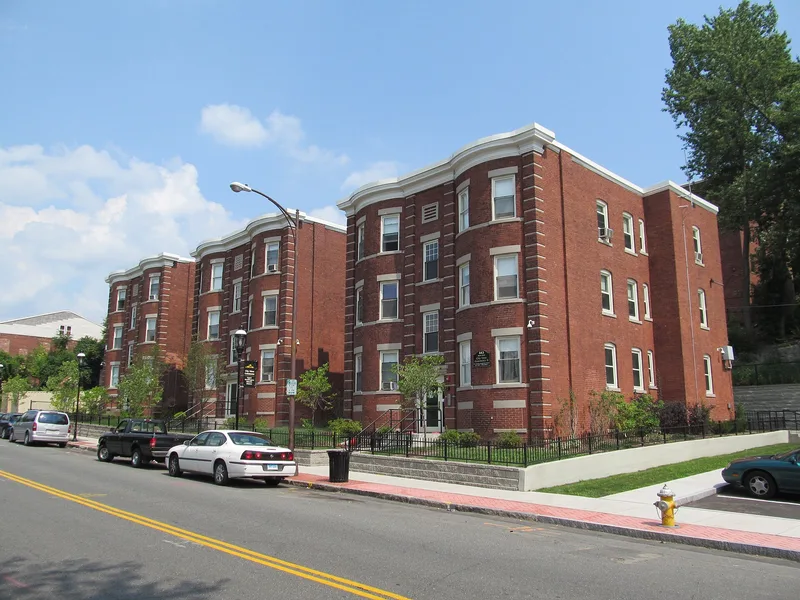
Upper Worthington is a compact neighborhood of about 28 buildings on a plateau just east of downtown Springfield, made up largely of four-story brick apartment blocks erected between 1908 and 1929. Most are Georgian Revival, with a Jacobethan Revival building and Tudor Revival examples, and they share consistent scale, setbacks and landscaped buffers. Summit Street, laid out with a curving plan and mature trees, gives the area a picturesque character unlike other apartment districts in the city. The land was once occupied by large homes and estates, including the Kibbe estate, demolished in 1912 to create Summit Street. The contracting firm of Gagnier and Angers, followed by their sons' firm, built most of the district, with Pierre Angers listed as architect for nearly all of their work. Three early blocks were built by Edward Jenks Pinney. The district is valued locally for its architecture, its builders and its role in Springfield's early 20th century housing boom.
Machine-generated summary. This summary was generated by a language model from the official nomination document and has not been reviewed line by line by an editor. It may contain errors. Check the source document before relying on any detail. Source: nomination document (PDF) · catalog entry. Generated October 2026 (model claude-sonnet-5-5, prompt v1.0-2026-10-29).
| Period of significance | 1908-1929 |
|---|---|
| Styles | Georgian Revival, with Jacobethan Revival and Tudor Revival examples |
| Areas of significance | Economics, Architecture |
| Acreage | 9 |
| Boundary source | NPS cultural-resource GIS polygon |
| Full listing page | Upper Worthington Historic District (property record) |
What listing means for this property
This is a historic district. Buildings within its boundary are either contributing (they add to the district's significance) or non-contributing. Owners of contributing income-producing buildings can claim the 20% federal rehabilitation tax credit; homeowners should look at state credits. National Register districts impose no design review by themselves; a local historic district ordinance, if one exists, does (the difference explained).
General information, not legal or tax advice. Rules change; confirm with your State Historic Preservation Office or a qualified adviser.