Upper Chapin Street Historic District

Why it's listed
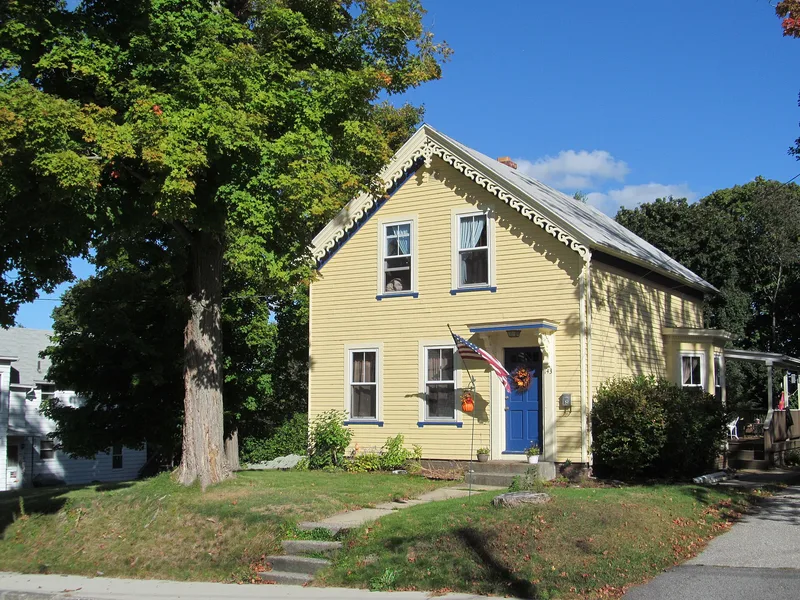
Upper Chapin Street is a compact neighborhood of fourteen gable-front, side-hall cottages, one-and-a-half or two stories high, facing each other along Chapin Street south of Dresser Street in Southbridge. Built between 1870 and 1898, they express the Italianate, Gothic, Stick and Queen Anne styles in a vernacular way. Brackets, bargeboards and cross bracing survive on most houses, although old photographs show that some once had more elaborate jigsaw-cut gables. The street was laid out in the 1870s, and seven houses stood by 1878. It formed part of a wider pattern of middle-class development around Elm Street that began about 1870, soon after the railroad arrived and as local industry grew. By 1898 nearly the whole street was built up. The district is valued as the best-preserved late-19th-century residential neighborhood in town, with houses intact on both sides of the street and a consistent period character.
Machine-generated summary. This summary was generated by a language model from the official nomination document and has not been reviewed line by line by an editor. It may contain errors. Check the source document before relying on any detail. Source: nomination document (PDF) · catalog entry. Generated October 2026 (model claude-sonnet-5-5, prompt v1.0-2026-10-29).
| Period of significance | 1870-1898 |
|---|---|
| Styles | Vernacular Italianate, Gothic, Stick and Queen Anne styles; gable-front, side-hall cottages |
| Areas of significance | Architecture |
| Acreage | 2.9 |
| Boundary source | NPS cultural-resource GIS polygon |
| Full listing page | Upper Chapin Street Historic District (property record) |
What listing means for this property
This is a historic district. Buildings within its boundary are either contributing (they add to the district's significance) or non-contributing. Owners of contributing income-producing buildings can claim the 20% federal rehabilitation tax credit; homeowners should look at state credits. National Register districts impose no design review by themselves; a local historic district ordinance, if one exists, does (the difference explained).
General information, not legal or tax advice. Rules change; confirm with your State Historic Preservation Office or a qualified adviser.