Twinehurst American Optical Company Neighborhood

Why it's listed
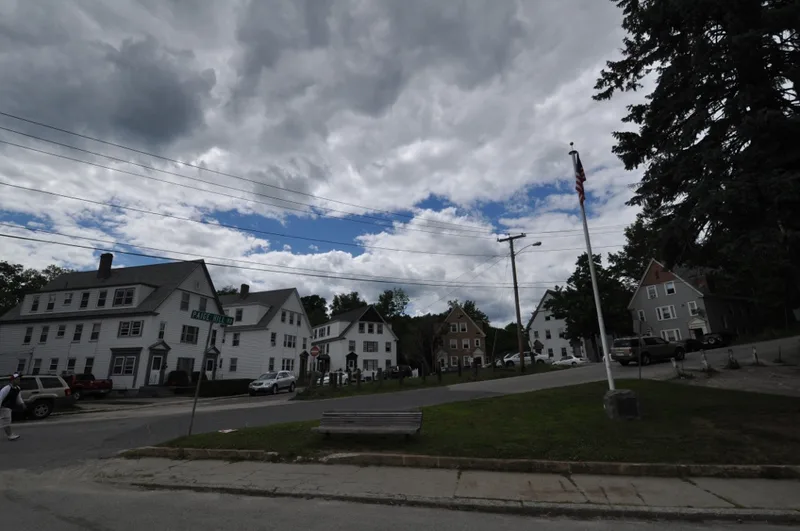
Seven shingled three-family houses curve around the west side of a circular street at the foot of Paige Hill Road in Southbridge. The American Optical Company built them as worker housing in the early twentieth century, between 1904 and 1925. They are a refined version of the three-decker, the most common multifamily house type in town at the time. With gable ends facing the street and long dormers, each looks like a two-and-a-half story two-family home, yet holds five or six room apartments on each of three floors. Colonial Revival pilaster-and-pediment entrances and the gently curving street give the group a suburban feel. The company's earlier worker housing in the area was less planned; this cluster reflects progressive ideas about industrial villages, in which good housing was expected to make workers happier and more productive. Later changes include replacement siding and enclosed porches and entrances, but the trim remains largely intact. The group is considered locally significant for its association with company housing and for its design.
Machine-generated summary. This summary was generated by a language model from the official nomination document and has not been reviewed line by line by an editor. It may contain errors. Check the source document before relying on any detail. Source: nomination document (PDF) · catalog entry. Generated October 2026 (model claude-sonnet-5-5, prompt v1.0-2026-10-29).
| Period of significance | 1904-1925 |
|---|---|
| Styles | Colonial Revival trim on three-family houses (variations on the triple-decker) |
| Areas of significance | Industry, Architecture |
| Acreage | 1.1 |
| Boundary source | NPS cultural-resource GIS polygon |
| Full listing page | Twinehurst American Optical Company Neighborhood (property record) |
What listing means for this property
This is a historic district. Buildings within its boundary are either contributing (they add to the district's significance) or non-contributing. Owners of contributing income-producing buildings can claim the 20% federal rehabilitation tax credit; homeowners should look at state credits. National Register districts impose no design review by themselves; a local historic district ordinance, if one exists, does (the difference explained).
General information, not legal or tax advice. Rules change; confirm with your State Historic Preservation Office or a qualified adviser.