Truro Highlands Historic District

Why it's listed
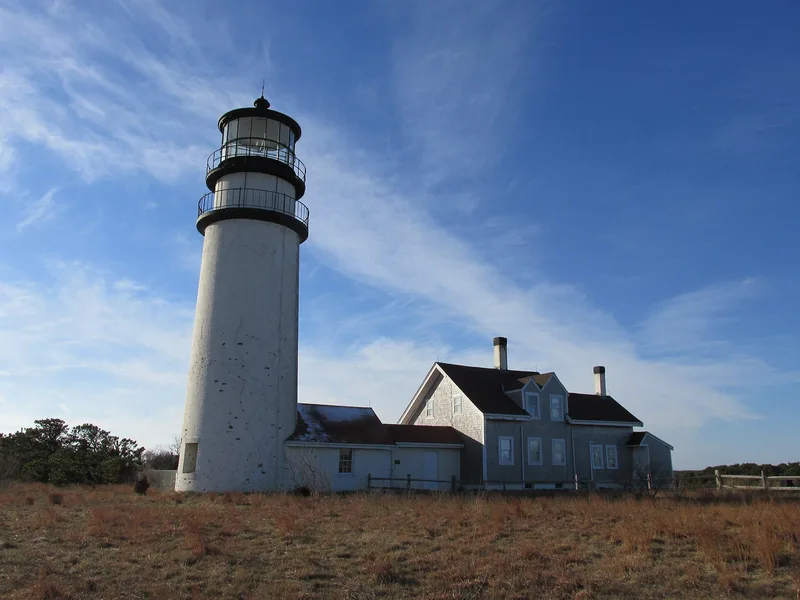
Perched on an elevated clay bluff above the Atlantic in North Truro, this 85-acre district grew up around the Highland House resort. It lies inside Cape Cod National Seashore and holds eight contributing resources: five early-twentieth-century resort buildings, the Highland Golf Links, Highland Light Road and the Highland Light Station. The Highland House, a two-story shingled wood-frame hotel built in 1907, is the largest building and now houses a museum. Nearby are the Margaret Adams Cottage, used as the golf clubhouse, and a group of three cottages named Rock, Haven and Beacon. The golf course, laid out in 1898, is described as an early American links-style course and an example of the national trend of adding golf to tourist resorts. The Highlands' clay base gave farmers workable soil, made the area the first settled on Truro's ocean side, and supported Cape Cod's first lighthouse. The same clay contributes to erosion along the cliff face.
Machine-generated summary. This summary was generated by a language model from the official nomination document and has not been reviewed line by line by an editor. It may contain errors. Check the source document before relying on any detail. Source: nomination document (PDF) · catalog entry. Generated October 2026 (model claude-sonnet-5-5, prompt v1.0-2026-10-29).
| Styles | No style |
|---|---|
| Areas of significance | Entertainment/Recreation, Landscape Architecture, Architecture |
| Acreage | 85 |
| Boundary source | NPS cultural-resource GIS polygon |
| Full listing page | Truro Highlands Historic District (property record) |
What listing means for this property
This is a historic district. Buildings within its boundary are either contributing (they add to the district's significance) or non-contributing. Owners of contributing income-producing buildings can claim the 20% federal rehabilitation tax credit; homeowners should look at state credits. National Register districts impose no design review by themselves; a local historic district ordinance, if one exists, does (the difference explained).
General information, not legal or tax advice. Rules change; confirm with your State Historic Preservation Office or a qualified adviser.