Town Hall Square Historic District

Why it's listed
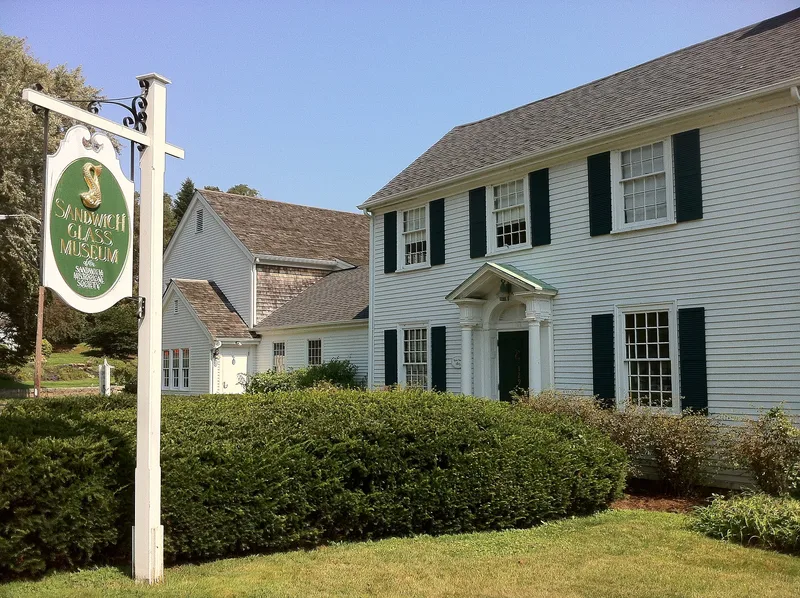
Town Hall Square in Sandwich, Massachusetts, anchors a district of about forty acres and 54 buildings and structures. The Greek Revival Town Hall of 1834 and the reconstructed Dexter Grist Mill face Shawme Pond at its center, and the streets that radiate from the square hold nine seventeenth century, fourteen eighteenth century and twenty-four nineteenth century buildings, plus a few modern ones. The area is the site of the first settlement on Cape Cod, founded in 1637. It remained farming country until Deming Jarves opened the Sandwich Glass Works in 1825, which brought industrial prosperity until the factory closed in 1888. The First Church of Christ, built in 1847, and the Town Hall reflect that era. Earlier buildings include the 1693 Melatiah Bourne House and the c. 1675 Hoxie House. The district was listed because it survives as a nearly intact early nineteenth century village, with the pond, trees, lawns and compatible buildings of three centuries creating a cohesive historic setting.
Machine-generated summary. This summary was generated by a language model from the official nomination document and has not been reviewed line by line by an editor. It may contain errors. Check the source document before relying on any detail. Source: nomination document (PDF) · catalog entry. Generated October 2026 (model claude-sonnet-5-5, prompt v1.0-2026-10-29).
| Styles | Greek Revival, with Colonial, Georgian and Federal buildings |
|---|---|
| Areas of significance | Industry, Exploration/Settlement, Architecture, Agriculture |
| Acreage | 40 |
| Boundary source | NPS cultural-resource GIS polygon |
| Full listing page | Town Hall Square Historic District (property record) |
What listing means for this property
This is a historic district. Buildings within its boundary are either contributing (they add to the district's significance) or non-contributing. Owners of contributing income-producing buildings can claim the 20% federal rehabilitation tax credit; homeowners should look at state credits. National Register districts impose no design review by themselves; a local historic district ordinance, if one exists, does (the difference explained).
General information, not legal or tax advice. Rules change; confirm with your State Historic Preservation Office or a qualified adviser.