Topsfield Town Common District

Why it's listed
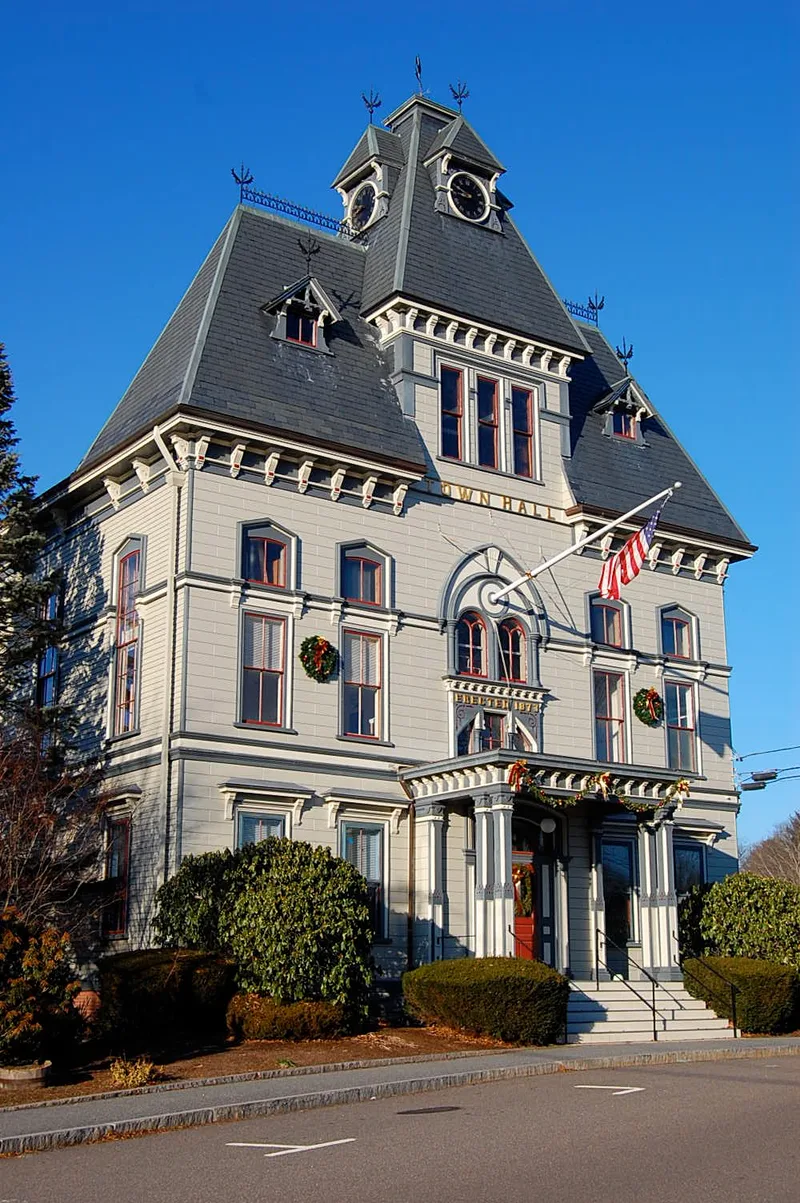
Topsfield's Town Common is the town's only remaining common land and the core of its oldest settled area. Ten buildings surround it, including residences, a church, a parish house, a town hall and a library. The oldest is the Parson Capen House of 1683, a National Historic Landmark with features drawn from English architecture of the sixteenth and seventeenth centuries. Two Federal houses, the Emerson-Jordan House of 1808 and the Emerson Center of 1814, reflect the prominent Emerson family. The Town Hall of 1873, the Greek Revival Congregational Church of 1842 and the brick Town Library of 1935 add further variety. The land served as a militia training field in early colonial times, and Minute Men gathered there before leaving for Concord and Lexington. Town meetings were later held in the Parish House and then the Town Hall. Most buildings keep their original detail, and together they show how Topsfield grew from a farming community into a modern town while keeping much of its rural character around the Common.
Machine-generated summary. This summary was generated by a language model from the official nomination document and has not been reviewed line by line by an editor. It may contain errors. Check the source document before relying on any detail. Source: nomination document (PDF) · catalog entry. Generated October 2026 (model claude-sonnet-5-5, prompt v1.0-2026-10-29).
| Period of significance | 1600-1999 (checked periods: 1600s, 1700s, 1800s, 1900-) |
|---|---|
| Styles | Mixed: Elizabethan (Parson Capen House), Federal, Greek Revival, Chateauesque and Stick, and classical revival |
| Areas of significance | Architecture, Military |
| Acreage | 13.1 |
| Boundary source | NPS cultural-resource GIS polygon |
| Full listing page | Topsfield Town Common District (property record) |
What listing means for this property
This is a historic district. Buildings within its boundary are either contributing (they add to the district's significance) or non-contributing. Owners of contributing income-producing buildings can claim the 20% federal rehabilitation tax credit; homeowners should look at state credits. National Register districts impose no design review by themselves; a local historic district ordinance, if one exists, does (the difference explained).
General information, not legal or tax advice. Rules change; confirm with your State Historic Preservation Office or a qualified adviser.