Terminal Storage Warehouse District

The National Park Service has not published a boundary polygon for this district; the map shows the listed properties inside it and the district's reference point.
Why it's listed
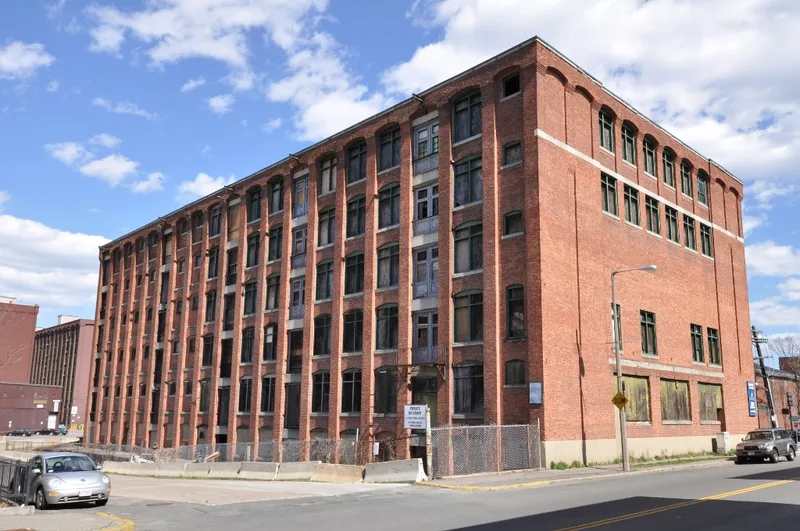
Three red brick warehouses stand on the south side of the Mystic River in Charlestown, Boston, on land once part of the large Boston & Lowell (later Boston & Maine) rail yards. Two eight-story Terminal Wharf buildings, built in 1910 and 1911, use reinforced concrete with mushroom columns and open floors, a fireproof system suited to storage and manufacturing. A six-story Terminal Storage Building, completed in 1912-1913, uses older heavy-timber mill construction. Boston's building code, which required fireproof construction for buildings over six stories, explains the difference. All have brick pilasters, segmental arches and concrete trim in a plain Classical Revival manner. Engineers Warren and Gerrish are credited with the design. Much of the surrounding waterfront industry has been replaced by a school, playing fields, housing and parking lots, so these buildings are rare survivors of the era when rail and ship carried goods through Boston. The district was recognized for its architecture and its role in industry between 1910 and 1962.
Machine-generated summary. This summary was generated by a language model from the official nomination document and has not been reviewed line by line by an editor. It may contain errors. Check the source document before relying on any detail. Source: nomination document (PDF) · catalog entry. Generated October 2026 (model claude-sonnet-5-5, prompt v1.0-2026-10-29).
| Period of significance | 1910-1962 |
|---|---|
| Styles | Classical Revival |
| Boundary source | not published |
| Full listing page | Terminal Storage Warehouse District (property record) |
What listing means for this property
This is a historic district. Buildings within its boundary are either contributing (they add to the district's significance) or non-contributing. Owners of contributing income-producing buildings can claim the 20% federal rehabilitation tax credit; homeowners should look at state credits. National Register districts impose no design review by themselves; a local historic district ordinance, if one exists, does (the difference explained).
General information, not legal or tax advice. Rules change; confirm with your State Historic Preservation Office or a qualified adviser.