Tavern Acres Historic District

Why it's listed
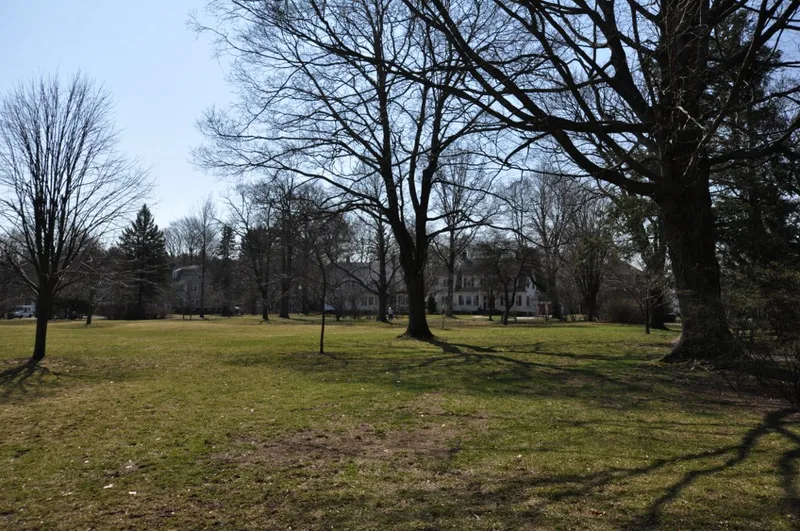
Tavern Acres is a planned neighborhood in northwest North Andover, Massachusetts, organized around the 1907 Stevens Memorial Library and a two-and-three-quarter-acre Memorial Park. The Stevens family, owners of local woolen mills, inherited land once known as the Tavern Lot and in 1920 began developing it with a park as the focus. The Olmsted Brothers prepared the plan. Twenty dwellings went up between 1920 and 1924, along with garages, in Colonial Revival, Dutch Colonial and Craftsman styles. Several houses follow plans by the Boston firm E.M. Parsons, and some are mirror-image pairs. Lots, setbacks and building scale are consistent, producing a unified suburban streetscape with mature trees. The library, designed by Guy Lowell in an Italian Renaissance manner with red brick and a terra cotta roof, anchors the northern end. Opposite it, the park holds the Patriots Monument of 1922. The district counts thirty-five contributing buildings, plus the park and monument.
Machine-generated summary. This summary was generated by a language model from the official nomination document and has not been reviewed line by line by an editor. It may contain errors. Check the source document before relying on any detail. Source: nomination document (PDF) · catalog entry. Generated October 2026 (model claude-sonnet-5-5, prompt v1.0-2026-10-29).
| Styles | Colonial Revival, Italian Renaissance, Craftsman |
|---|---|
| Areas of significance | Architecture, Community Planning and Development, Landscape Architecture |
| Acreage | 9 |
| Boundary source | NPS cultural-resource GIS polygon |
| Full listing page | Tavern Acres Historic District (property record) |
What listing means for this property
This is a historic district. Buildings within its boundary are either contributing (they add to the district's significance) or non-contributing. Owners of contributing income-producing buildings can claim the 20% federal rehabilitation tax credit; homeowners should look at state credits. National Register districts impose no design review by themselves; a local historic district ordinance, if one exists, does (the difference explained).
General information, not legal or tax advice. Rules change; confirm with your State Historic Preservation Office or a qualified adviser.