Sullivan's Corner Historic District

Why it's listed
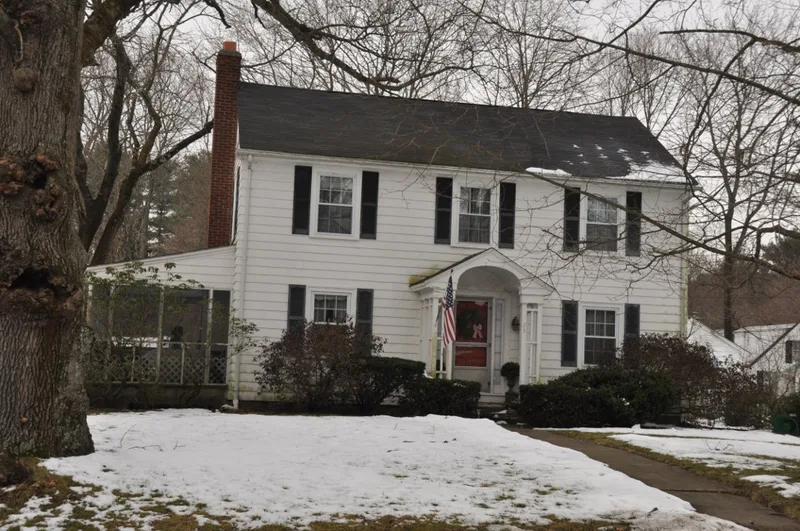
Sullivan's Corner is a small historic crossroads in northeastern Norfolk, Massachusetts, where Main, Needham and Seekonk Streets meet. The district covers about eighteen acres, roughly a quarter of it taken up by Norfolk Cemetery, which dates to 1736 and 1745 and is now town-owned. Its grave markers run from early slate stones with winged skulls to Victorian Gothic marble and 20th-century granite blocks. Five other properties surround the cemetery: the Ware-Love House (ca. 1830), the Blake-Pond-Meehan House, a Greek Revival cape described as one of the best preserved in Norfolk, Sullivan's Store (ca. 1913), a corner store form not seen elsewhere in town, and the Colonial Revival Phelan House (ca. 1936). Records tie the buildings to local farming families, including Irish immigrants who bought property here in the 1800s. The district was listed because it keeps a continuous village streetscape that nearby newer construction does not match.
Machine-generated summary. This summary was generated by a language model from the official nomination document and has not been reviewed line by line by an editor. It may contain errors. Check the source document before relying on any detail. Source: nomination document (PDF) · catalog entry. Generated October 2026 (model claude-sonnet-5-5, prompt v1.0-2026-10-29).
| Styles | Late 19th-Early 20th Century Revivals: Greek Revival, Colonial Revival |
|---|---|
| Areas of significance | Architecture, Community Planning and Development, Social History |
| Acreage | 18 |
| Boundary source | NPS cultural-resource GIS polygon |
| Full listing page | Sullivan's Corner Historic District (property record) |
What listing means for this property
This is a historic district. Buildings within its boundary are either contributing (they add to the district's significance) or non-contributing. Owners of contributing income-producing buildings can claim the 20% federal rehabilitation tax credit; homeowners should look at state credits. National Register districts impose no design review by themselves; a local historic district ordinance, if one exists, does (the difference explained).
General information, not legal or tax advice. Rules change; confirm with your State Historic Preservation Office or a qualified adviser.