Stony Brook-Factory Village Historic District

Why it's listed
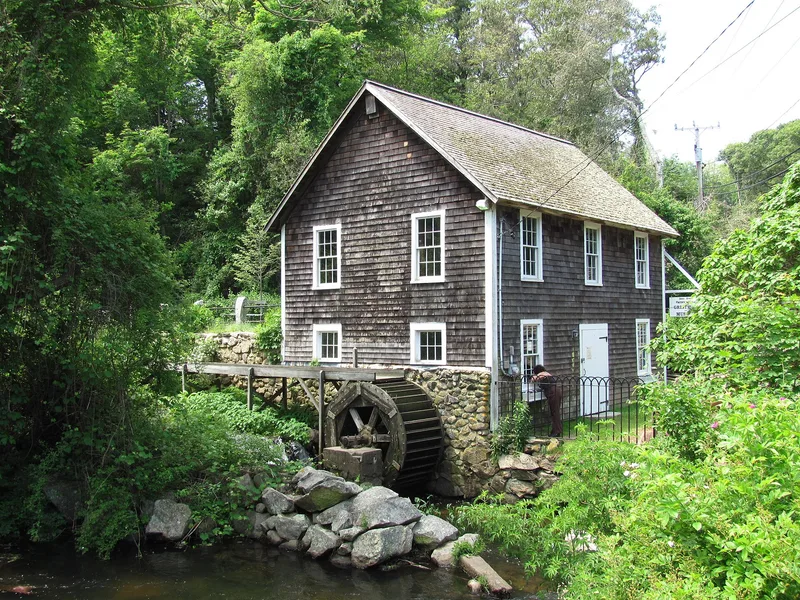
Stony Brook and its Factory Village form a compact district of about 85 acres in western Brewster, near the Dennis line. A strong water privilege, a 26-foot drop from pond to sea, drew mills to the brook from the late 17th century. Over time the valley held fulling, grist, woolen, cotton and paper mills and a tannery, with dwellings on the surrounding hills. Much of the site was controlled by the Winslow family. Today the 1873 Old Grist Mill is the only surviving mill building, joined by earlier foundations, dams, raceways and fish ladders. Historic houses from the early 18th to late 19th centuries, stone walls, barns and the early 18th-century Dillingham Cemetery complete the setting. The town set aside the mill sites for public use in 1940. The district was recognized as one of the largest and most complete industrial villages in Barnstable County, with a period of significance from about 1661 to 1948.
Machine-generated summary. This summary was generated by a language model from the official nomination document and has not been reviewed line by line by an editor. It may contain errors. Check the source document before relying on any detail. Source: nomination document (PDF) · catalog entry. Generated October 2026 (model claude-sonnet-5-5, prompt v1.0-2026-10-29).
| Period of significance | ca. 1661-1948 |
|---|---|
| Styles | Mixed: Georgian, Federal, Gothic Revival, Greek Revival, craftsman/bungalow, full, 3/4 and half Cape forms, vernacular and reproduction Cape |
| Areas of significance | Architecture, Conservation, Industry |
| Acreage | 85 |
| Boundary source | NPS cultural-resource GIS polygon |
| Full listing page | Stony Brook-Factory Village Historic District (property record) |
What listing means for this property
This is a historic district. Buildings within its boundary are either contributing (they add to the district's significance) or non-contributing. Owners of contributing income-producing buildings can claim the 20% federal rehabilitation tax credit; homeowners should look at state credits. National Register districts impose no design review by themselves; a local historic district ordinance, if one exists, does (the difference explained).
General information, not legal or tax advice. Rules change; confirm with your State Historic Preservation Office or a qualified adviser.