South End District

Why it's listed
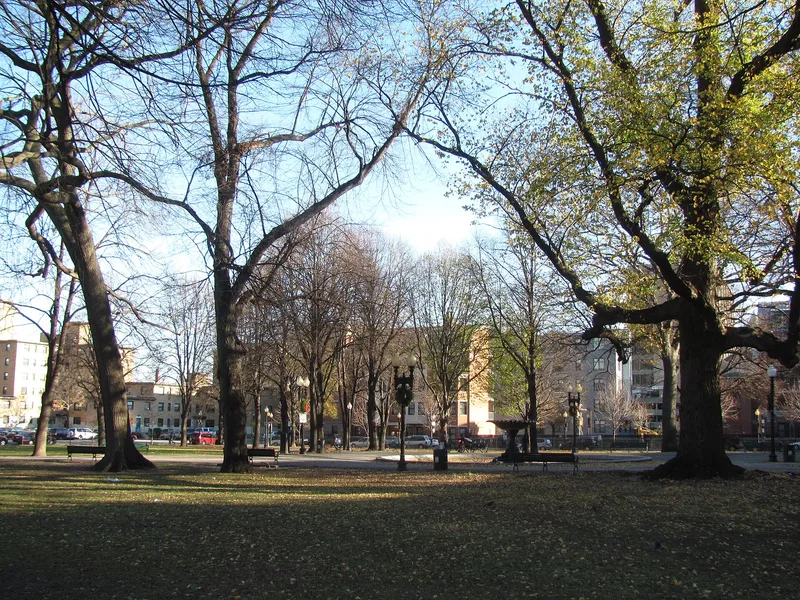
Boston's South End is a 238-acre district of brick and brownstone rowhouses arranged around landscaped residential squares, planned in 1848 and built up partly on filled land through the early 1870s. The city sold the land at auction with rules on height, materials, setback and building form, and developers built homes for businessmen and industrialists. The result is a notably uniform streetscape of bow-fronted, mansard-roofed Italianate rowhouses, with Union Park, Worcester, Chester, Blackstone, Franklin, Concord and Rutland Squares as focal points. Later, wealthy families moved to the Back Bay, and working-class and immigrant residents took their place, yet the architecture stayed cohesive and high in quality. Notable buildings include the Allen House, built in 1859 for a furniture dealer, the Franklin Square House, and churches such as the Cathedral of the Holy Cross. The district is described as the largest remaining Victorian urban residential neighborhood in the country.
Machine-generated summary. This summary was generated by a language model from the official nomination document and has not been reviewed line by line by an editor. It may contain errors. Check the source document before relying on any detail. Source: nomination document (PDF) · catalog entry. Generated October 2026 (model claude-sonnet-5-5, prompt v1.0-2026-10-29).
| Styles | Predominantly Italianate rowhouses, with Greek Revival, Renaissance Revival, Second Empire, Gothic Revival and other influences |
|---|---|
| Areas of significance | Community Planning and Development, Landscape Architecture, Architecture |
| Acreage | 238 |
| Boundary source | NPS cultural-resource GIS polygon |
| Full listing page | South End District (property record) |
What listing means for this property
This is a historic district. Buildings within its boundary are either contributing (they add to the district's significance) or non-contributing. Owners of contributing income-producing buildings can claim the 20% federal rehabilitation tax credit; homeowners should look at state credits. National Register districts impose no design review by themselves; a local historic district ordinance, if one exists, does (the difference explained).
General information, not legal or tax advice. Rules change; confirm with your State Historic Preservation Office or a qualified adviser.