South Common Historic District

Why it's listed
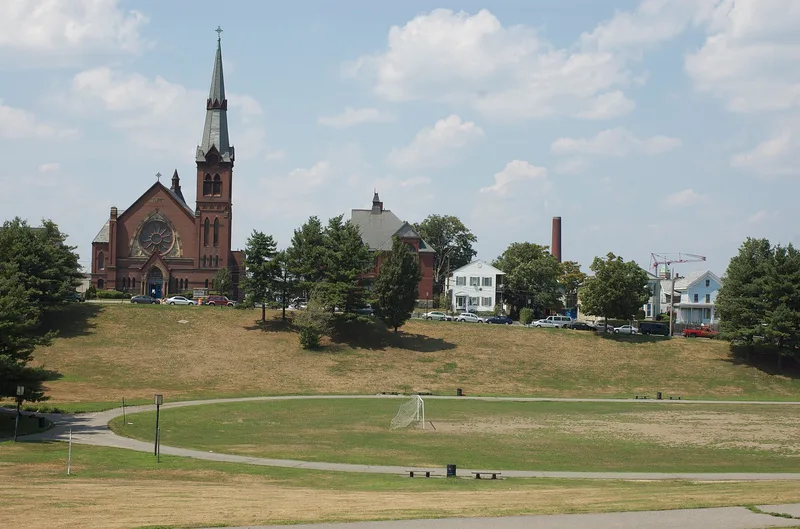
Southwest of downtown Lowell, the South Common is a 22.5-acre green space set aside by the city in 1845 after the Proprietors of Locks and Canals sold off surplus land. Around it grew a neighborhood of about 40 acres with 17 houses, three churches, three schools, a courthouse, a former jail and a mill. Highland and Summer Streets hold Italianate, Second Empire and Stick style homes built for merchants and manufacturers. Ammi B. Young designed the 1850 Middlesex County Courthouse, Lowell's earliest and finest Romanesque Revival building, and Olin Cutler added a large front section in 1897. The granite Lowell Jail dates from 1856. St. Peter's, St. John's and Eliot churches add Gothic Revival design. Hood's Sarsaparilla Laboratory, finished in sections between 1882 and 1893, was the largest patent medicine factory in the world by 1893. Today the common holds courts and a pool alongside walkways and plantings.
Machine-generated summary. This summary was generated by a language model from the official nomination document and has not been reviewed line by line by an editor. It may contain errors. Check the source document before relying on any detail. Source: nomination document (PDF) · catalog entry. Generated October 2026 (model claude-sonnet-5-5, prompt v1.0-2026-10-29).
| Period of significance | 1845-1933 |
|---|---|
| Styles | Italianate, Second Empire, Stick, Romanesque Revival, Renaissance Revival, Gothic and Queen Anne |
| Areas of significance | Industry, Community Planning and Development, Politics/Government, Architecture, Invention |
| Acreage | 40 |
| Boundary source | NPS cultural-resource GIS polygon |
| Full listing page | South Common Historic District (property record) |
What listing means for this property
This is a historic district. Buildings within its boundary are either contributing (they add to the district's significance) or non-contributing. Owners of contributing income-producing buildings can claim the 20% federal rehabilitation tax credit; homeowners should look at state credits. National Register districts impose no design review by themselves; a local historic district ordinance, if one exists, does (the difference explained).
General information, not legal or tax advice. Rules change; confirm with your State Historic Preservation Office or a qualified adviser.