Smith Carriage Company District

The National Park Service has not published a boundary polygon for this district; the map shows the listed properties inside it and the district's reference point.
Why it's listed
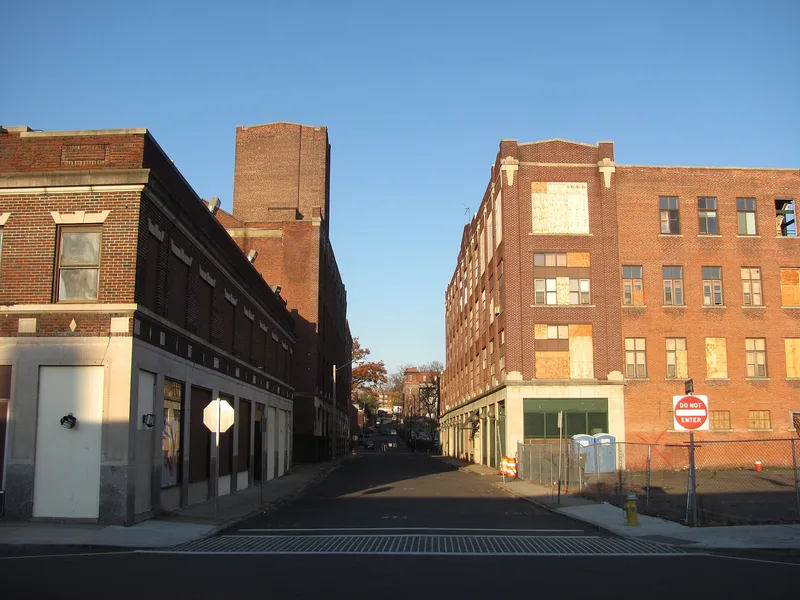
Three industrial buildings line Park Street in downtown Springfield, Massachusetts, all built for the Smith Carriage Company as the firm grew. The earliest, from the late 19th century, is a three-story, seven-bay brick building with broad segmental arched windows and a corbelled brick cornice. Two later buildings from the 1920s are four-story steel and concrete structures faced in brick, with large bays of industrial sash and unusually detailed terra cotta coursing and pilasters. Each drops to two stories at Willow Street. The company was founded on Park Street in 1827 by David Smith, and his son William H. Smith took over in 1873. The firm made light carriages and is credited with supplying the first frame used for an automobile by the Stevens Duryea Company, a second-hand buggy frame. Between 1910 and 1920 it turned to auto body parts, continuing until the 1940s. The district covers about one acre and preserves the company's remaining buildings.
Machine-generated summary. This summary was generated by a language model from the official nomination document and has not been reviewed line by line by an editor. It may contain errors. Check the source document before relying on any detail. Source: nomination document (PDF) · catalog entry. Generated October 2026 (model claude-sonnet-5-5, prompt v1.0-2026-10-29).
| Period of significance | c. 1880-1924 |
|---|---|
| Styles | Industrial; late 19th century brick manufacturing building and 1920s steel and concrete industrial design |
| Areas of significance | Industry |
| Acreage | 1 |
| Boundary source | not published |
| Full listing page | Smith Carriage Company District (property record) |
What listing means for this property
This is a historic district. Buildings within its boundary are either contributing (they add to the district's significance) or non-contributing. Owners of contributing income-producing buildings can claim the 20% federal rehabilitation tax credit; homeowners should look at state credits. National Register districts impose no design review by themselves; a local historic district ordinance, if one exists, does (the difference explained).
General information, not legal or tax advice. Rules change; confirm with your State Historic Preservation Office or a qualified adviser.