Sherman Apartments Historic District

Why it's listed
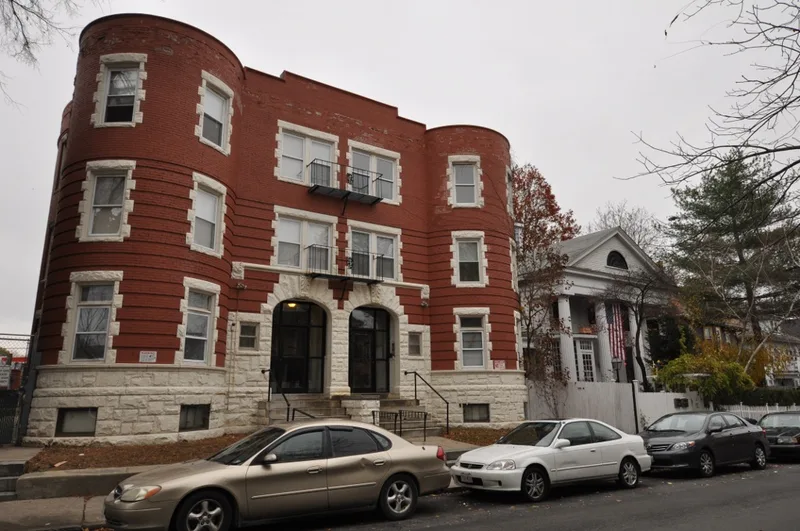
Four buildings at the corner of Washington and Lyndhurst Streets in Boston's Dorchester neighborhood make up this district at the northern edge of Codman Square. Walter U. Sherman built three three-story brick apartment buildings here between 1904 and 1906, each first designed as a six-family dwelling and later divided into twelve units. They share a Classical Revival character, with central paired recessed entrances, rounded bays, granite and cast-stone detailing, and brick banding. The fourth building, at 18 Lyndhurst Street, dates to 1831 and began as the Dorchester Academy, a private boys' school. Its Greek Revival design features fluted Doric columns and a pediment. Sherman turned it 90 degrees and moved it about 75 feet to make room for the apartments, and it later became a two-family home. Together the buildings show how Codman Square developed once electrified streetcars improved access to downtown Boston. Many original details survive, though most windows have been replaced.
Machine-generated summary. This summary was generated by a language model from the official nomination document and has not been reviewed line by line by an editor. It may contain errors. Check the source document before relying on any detail. Source: nomination document (PDF) · catalog entry. Generated October 2026 (model claude-sonnet-5-5, prompt v1.0-2026-10-29).
| Styles | Late 19th and 20th Century Revivals: Classical Revival, Greek Revival |
|---|---|
| Areas of significance | Architecture, Community Planning and Development, Education |
| Acreage | 0.9 |
| Boundary source | NPS cultural-resource GIS polygon |
| Full listing page | Sherman Apartments Historic District (property record) |
What listing means for this property
This is a historic district. Buildings within its boundary are either contributing (they add to the district's significance) or non-contributing. Owners of contributing income-producing buildings can claim the 20% federal rehabilitation tax credit; homeowners should look at state credits. National Register districts impose no design review by themselves; a local historic district ordinance, if one exists, does (the difference explained).
General information, not legal or tax advice. Rules change; confirm with your State Historic Preservation Office or a qualified adviser.