Shelburne Falls Historic District (Boundary Increase 2010)

Why it's listed
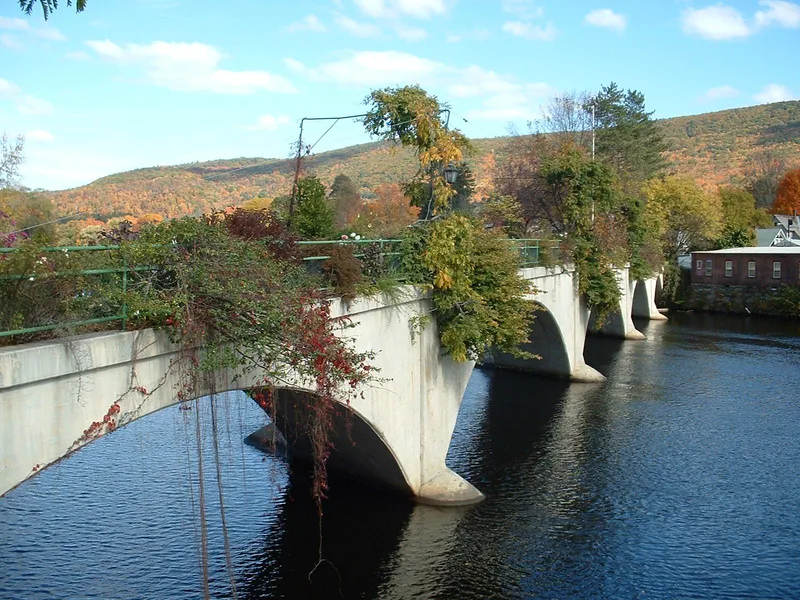
This neighborhood of about 163 acres in Shelburne, Massachusetts, lies northeast of the original Shelburne Falls historic core and extends the district to include its largely residential surroundings. It contains 360 resources, mostly modest wood-frame houses with connected barns, along with churches, former schools, a lodge hall, a gymnasium and the 31.6-acre Arms Cemetery. Contributing buildings date from about 1784 to the 1950s, with most built between 1850 and 1900, when the village was prospering. Greek Revival, Italianate and Queen Anne styles predominate. The area is tied to local industry and invention. Lockmaker Linus Yale Jr. bought a Gothic Revival house at 3 South Maple Street, Joseph W. Gardner held patents for cutlery improvements, and Jonas King Patch operated a photography business from the district. Mayhew tool manufacturing also left its mark on the area. The district was extended because it preserves the character of a dense, 19th-century industrial village.
Machine-generated summary. This summary was generated by a language model from the official nomination document and has not been reviewed line by line by an editor. It may contain errors. Check the source document before relying on any detail. Source: nomination document (PDF) · catalog entry. Generated October 2026 (model claude-sonnet-5-5, prompt v1.0-2026-10-29).
| Period of significance | ca. 1784-1960 |
|---|---|
| Styles | Federal, Greek Revival, Gothic Revival, Octagon Mode, Italianate, Victorian Gothic, Second Empire, Queen Anne, Colonial Revival, Craftsman |
| Areas of significance | Architecture, Community Planning and Development, Industry |
| Acreage | 163 |
| Boundary source | NPS cultural-resource GIS polygon |
| Full listing page | Shelburne Falls Historic District (Boundary Increase 2010) (property record) |
What listing means for this property
This is a historic district. Buildings within its boundary are either contributing (they add to the district's significance) or non-contributing. Owners of contributing income-producing buildings can claim the 20% federal rehabilitation tax credit; homeowners should look at state credits. National Register districts impose no design review by themselves; a local historic district ordinance, if one exists, does (the difference explained).
General information, not legal or tax advice. Rules change; confirm with your State Historic Preservation Office or a qualified adviser.