Sacred Heart Parish Complex

Why it's listed
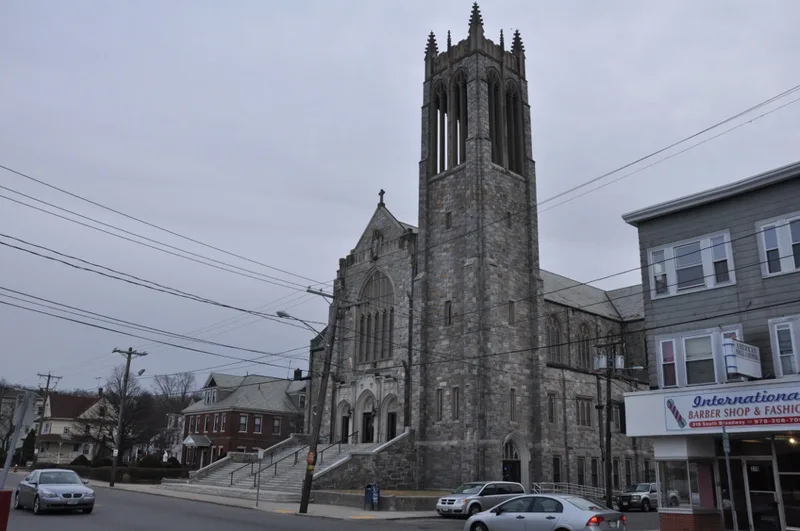
Sacred Heart Parish Complex occupies about 85,000 square feet in South Lawrence, Massachusetts, on South Broadway. It holds six resources: a granite Gothic Revival church (1916 base, mostly built 1934-1936), a Colonial Revival brick rectory (1924), a stucco convent (1920), two brick schools (1899 and 1925), and a fieldstone grotto. The parish began in 1899 as a mission of St. Anne's, serving the growing French Canadian neighborhood of South Lawrence. The first building doubled as chapel and school, reflecting the importance of parochial education in preserving French language and faith. The Sisters of the Holy Union taught there for nearly a century, and enrollment peaked in 1935. Local architects, including Joseph G. Morissette, designed several of the buildings. A 2010 rehabilitation turned the convent and both schools into apartments while keeping historic trim, doors, tin ceilings and chalkboard sections. The rectory and church remain in religious use.
Machine-generated summary. This summary was generated by a language model from the official nomination document and has not been reviewed line by line by an editor. It may contain errors. Check the source document before relying on any detail. Source: nomination document (PDF) · catalog entry. Generated October 2026 (model claude-sonnet-5-5, prompt v1.0-2026-10-29).
| Styles | Late Victorian/Romanesque; Late 19th and 20th Century Revivals/Colonial Revival, Late Gothic Revival |
|---|---|
| Areas of significance | Architecture, Community Planning and Development, Religion |
| Acreage | 2 |
| Boundary source | NPS cultural-resource GIS polygon |
| Full listing page | Sacred Heart Parish Complex (property record) |
What listing means for this property
This is a historic district. Buildings within its boundary are either contributing (they add to the district's significance) or non-contributing. Owners of contributing income-producing buildings can claim the 20% federal rehabilitation tax credit; homeowners should look at state credits. National Register districts impose no design review by themselves; a local historic district ordinance, if one exists, does (the difference explained).
General information, not legal or tax advice. Rules change; confirm with your State Historic Preservation Office or a qualified adviser.