Sachem Rock Farm

Why it's listed
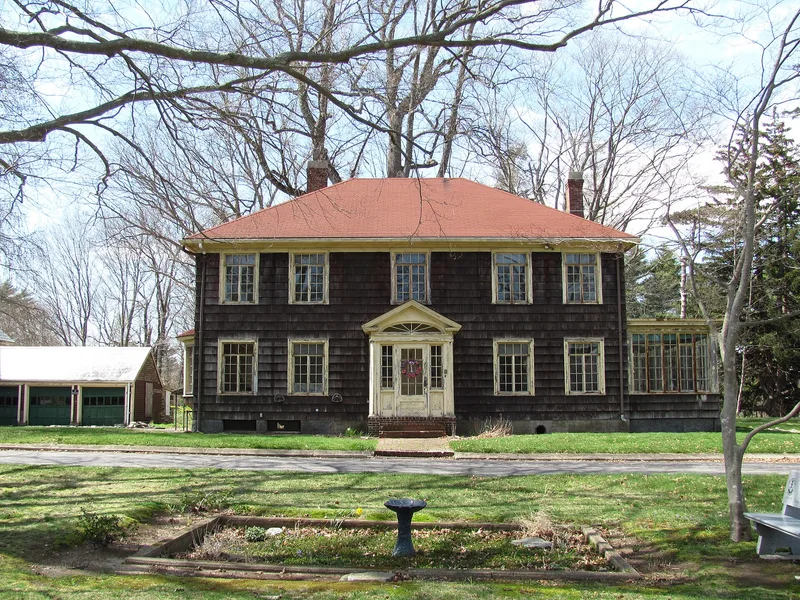
Sachem Rock Farm is a 31.63-acre farm at 355 Plymouth Street in East Bridgewater, Massachusetts, bordered on the west by a bend of the Satucket River. A long drive lined with old sugar maples leads to the farmstead, where a two-story Colonial Revival house built in 1927 stands on the fieldstone foundation of an 1869 farmhouse that burned the year before. Behind it is a barn complex begun in the 1870s for Thomas Hewitt, with a timber frame, a stanchion area with a manure trench, and later additions. Just west of the house rises Sachem Rock, a ledge about 25 feet high and over 70 feet long. Meadows, a stone-lined drainage ditch and early concrete garden features complete the landscape. The land traces back to the Latham family farms of the 1700s, later passing through owners such as Ezra Kingman. The farm is recognized for its continuous agricultural history and its intact farmstead and landscape.
Machine-generated summary. This summary was generated by a language model from the official nomination document and has not been reviewed line by line by an editor. It may contain errors. Check the source document before relying on any detail. Source: nomination document (PDF) · catalog entry. Generated October 2026 (model claude-sonnet-5-5, prompt v1.0-2026-10-29).
| Styles | Colonial Revival |
|---|---|
| Areas of significance | Agriculture, Architecture, Community Planning and Development |
| Acreage | 31.6 |
| Boundary source | NPS cultural-resource GIS polygon |
| Full listing page | Sachem Rock Farm (property record) |
What listing means for this property
This is a historic district. Buildings within its boundary are either contributing (they add to the district's significance) or non-contributing. Owners of contributing income-producing buildings can claim the 20% federal rehabilitation tax credit; homeowners should look at state credits. National Register districts impose no design review by themselves; a local historic district ordinance, if one exists, does (the difference explained).
Noted as vacant in the nomination. Nomination documents can be decades old; current status may differ. If you are considering buying an empty listed property, read the due-diligence checklist.
General information, not legal or tax advice. Rules change; confirm with your State Historic Preservation Office or a qualified adviser.