Russells Mills Village Historic District

Why it's listed
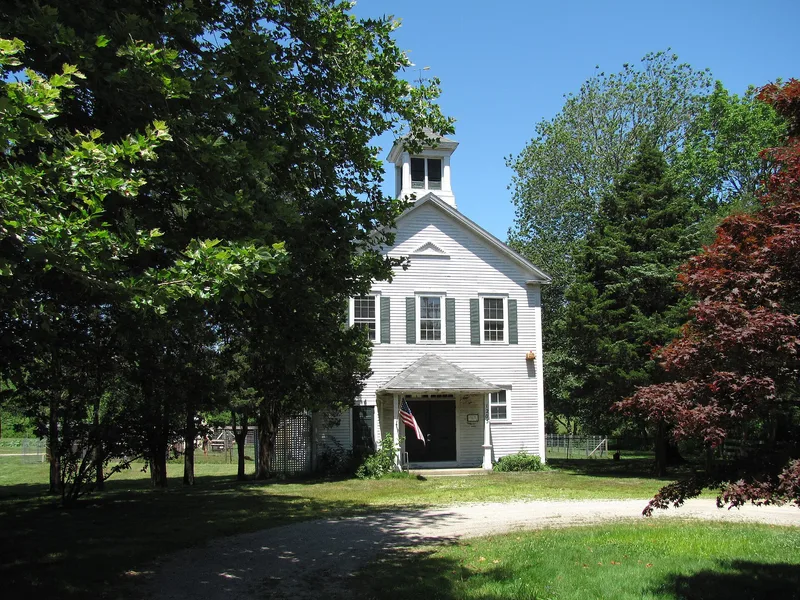
Russells Mills is a small crossroads village in Dartmouth, Massachusetts, laid out along the Paskamansett River about seven miles south of New Bedford. The district holds forty-one wood frame buildings, thirty-seven of which contribute to its character. Settlement began in the 1660s and 1670s with the Russell family, and water power later drew as many as eleven mills for grinding grain, fulling cloth, working iron and sawing lumber. None of the mills survives, though dams, ponds and foundations remain. The surviving buildings include a ca. 1670 saltbox thought to be the oldest house in Dartmouth, Federal cottages, Greek Revival houses, a Second Empire dwelling, a general store, a town pound from 1831, a church, schools and a grange hall. Little has changed since the mid-nineteenth century, so the village keeps its rural setting and small hay and vegetable fields. The nomination also points to archaeological potential, including mill sites and a reported Indian burial ground.
Machine-generated summary. This summary was generated by a language model from the official nomination document and has not been reviewed line by line by an editor. It may contain errors. Check the source document before relying on any detail. Source: nomination document (PDF) · catalog entry. Generated October 2026 (model claude-sonnet-5-5, prompt v1.0-2026-10-29).
| Period of significance | 1652-1920 |
|---|---|
| Styles | Rural interpretations of New England styles: First Period, Federal, Greek Revival, Second Empire, Queen Anne/Shingle |
| Areas of significance | Industry, Prehistoric, Community Planning and Development, Historic - Non-Aboriginal, Exploration/Settlement, Architecture, Religion |
| Acreage | 74 |
| Boundary source | NPS cultural-resource GIS polygon |
| Full listing page | Russells Mills Village Historic District (property record) |
What listing means for this property
This is a historic district. Buildings within its boundary are either contributing (they add to the district's significance) or non-contributing. Owners of contributing income-producing buildings can claim the 20% federal rehabilitation tax credit; homeowners should look at state credits. National Register districts impose no design review by themselves; a local historic district ordinance, if one exists, does (the difference explained).
General information, not legal or tax advice. Rules change; confirm with your State Historic Preservation Office or a qualified adviser.