Plymouth Village Historic District

Why it's listed
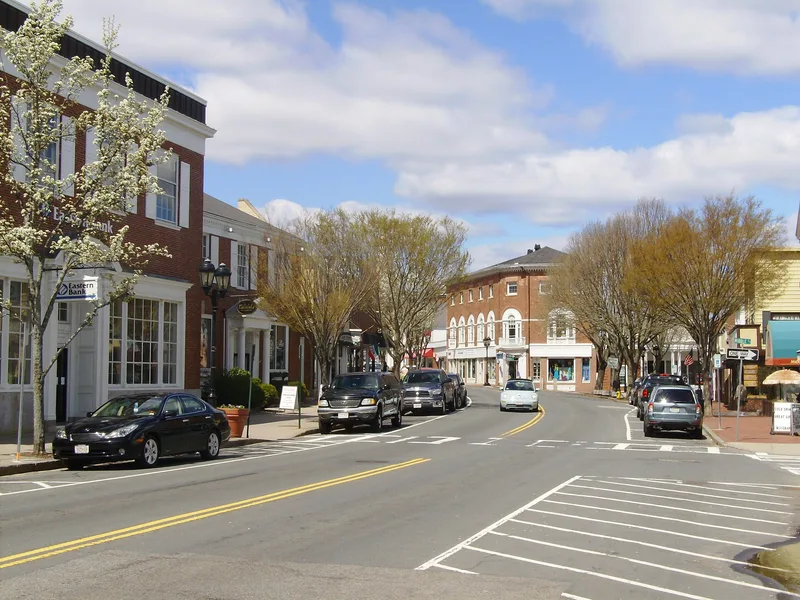
This neighborhood of about 60 buildings sits on a plateau above Plymouth Harbor and takes in Leyden, North, Carver, Winslow and part of Middle Streets. Leyden Street was laid out in 1621, North Street in 1633 and Middle Street in 1725, and the street pattern is all that remains of the earliest settlement. The first 17th century houses were replaced by sturdy Georgian, delicate Federal and refined Greek Revival buildings, mostly 2½-story wood-frame houses set close to the street. Notable examples include the Winslow House of 1754, the Spooner House of 1749, and the brick house at 26 North Street from 1775. Residents included ship captains, ministers, physicians and town officials. Jacob and Abner Taylor built several of the Greek Revival houses, and Joseph Everett Chandler altered the Winslow House. Coles Hill, where the Pilgrims buried their dead the first winter, lies within the district. The area was judged significant for its role in early English settlement, its notable residents and its architecture.
Machine-generated summary. This summary was generated by a language model from the official nomination document and has not been reviewed line by line by an editor. It may contain errors. Check the source document before relying on any detail. Source: nomination document (PDF) · catalog entry. Generated October 2026 (model claude-sonnet-5-5, prompt v1.0-2026-10-29).
| Styles | Georgian, Federal and Greek Revival, with some late Victorian Gothic and Classical Revival buildings |
|---|---|
| Areas of significance | Commerce, Historic - Non-Aboriginal, Exploration/Settlement, Architecture, Religion |
| Acreage | 35 |
| Boundary source | NPS cultural-resource GIS polygon |
| Full listing page | Plymouth Village Historic District (property record) |
What listing means for this property
This is a historic district. Buildings within its boundary are either contributing (they add to the district's significance) or non-contributing. Owners of contributing income-producing buildings can claim the 20% federal rehabilitation tax credit; homeowners should look at state credits. National Register districts impose no design review by themselves; a local historic district ordinance, if one exists, does (the difference explained).
General information, not legal or tax advice. Rules change; confirm with your State Historic Preservation Office or a qualified adviser.