Pill Hill Historic District

Why it's listed
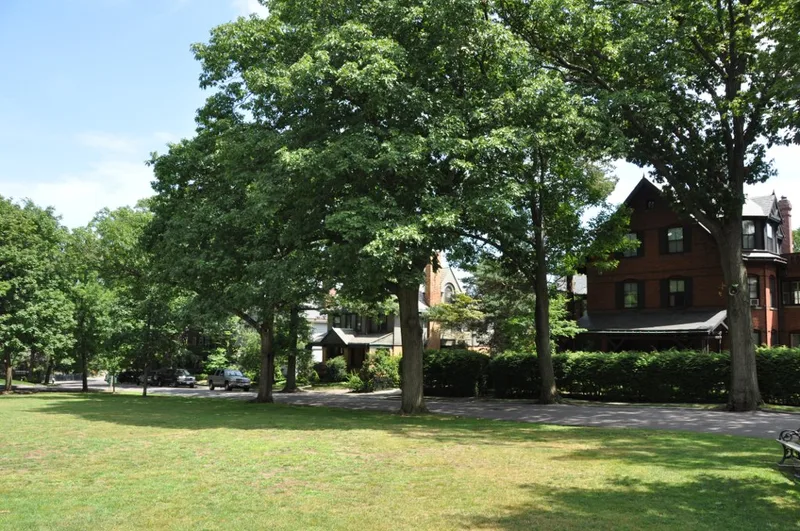
Pill Hill is a hillside neighborhood in the southeast corner of Brookline, Massachusetts, covering about 52 acres and 127 properties. Winding roads, stone walls, picket fences and mature trees frame mostly single-family houses, and several grounds were landscaped by Frederick Law Olmsted. From the hilltop, views reach toward Boston. Houses range from the 1822 Federal-style Tappan-Philbrick estate to Shingle Style, Queen Anne, Stick Style and Colonial Revival homes of the late 1800s, many designed by prominent Boston firms such as Peabody and Stearns and Ware and Van Brunt. Brick, stone, shingle and clapboard recur throughout and give the area a unified look. Development followed the 1844 annexation of Roxbury land and the arrival of the railroad in 1848. Residents included abolitionist Samuel Philbrick, educators and many physicians, which likely gave the hill its name. The Free Hospital for Women moved here in 1895 and pioneered teaching and cancer radiation treatment.
Machine-generated summary. This summary was generated by a language model from the official nomination document and has not been reviewed line by line by an editor. It may contain errors. Check the source document before relying on any detail. Source: nomination document (PDF) · catalog entry. Generated October 2026 (model claude-sonnet-5-5, prompt v1.0-2026-10-29).
| Styles | Mixed late 19th-century styles: English Cottage, Greek Revival, Mansard, Stick Style, Shingle Style, Queen Anne and Colonial/Federal Revival |
|---|---|
| Areas of significance | Community Planning and Development, Landscape Architecture, Education, Science, Architecture, Social History |
| Acreage | 52 |
| Boundary source | NPS cultural-resource GIS polygon |
| Full listing page | Pill Hill Historic District (property record) |
What listing means for this property
This is a historic district. Buildings within its boundary are either contributing (they add to the district's significance) or non-contributing. Owners of contributing income-producing buildings can claim the 20% federal rehabilitation tax credit; homeowners should look at state credits. National Register districts impose no design review by themselves; a local historic district ordinance, if one exists, does (the difference explained).
General information, not legal or tax advice. Rules change; confirm with your State Historic Preservation Office or a qualified adviser.