Pierce Farm Historic District

Why it's listed
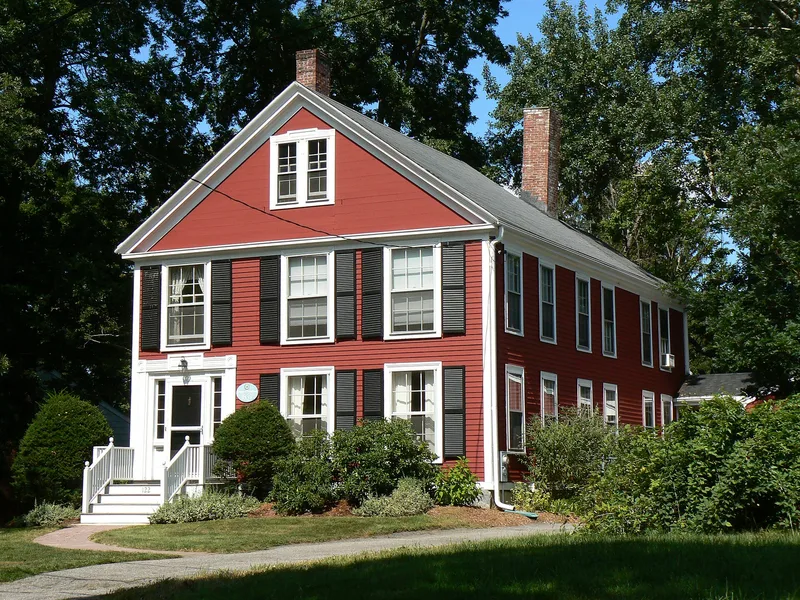
Three farmhouses at the corner of Claremont and Oakland Avenues in Arlington Heights make up this small district. They once formed the Peirce homestead, established in the 1830s by three members of the Peirce family who were among the first to settle the rocky, wooded highlands of western Arlington. The J. Peirce House (ca. 1830) is a 2 1/2-story, five-bay dwelling that is mainly Federal with Greek Revival features. The John A. P. Peirce House (ca. 1835) is a side-hall clapboard house mixing the same two styles. The Thomas Peirce House (ca. 1850) is a full Greek Revival design with a temple front and a colonnaded porch. The houses stand at an angle to the present streets, following older roadways that have vanished. The family sold much of its land in the 1870s, which opened the area to rapid development. The group is recognized for its link to Arlington's farming past and for its intact early architecture.
Machine-generated summary. This summary was generated by a language model from the official nomination document and has not been reviewed line by line by an editor. It may contain errors. Check the source document before relying on any detail. Source: nomination document (PDF) · catalog entry. Generated October 2026 (model claude-sonnet-5-5, prompt v1.0-2026-10-29).
| Period of significance | 1830-1850 |
|---|---|
| Styles | Federal and Greek Revival |
| Areas of significance | Agriculture, Architecture |
| Acreage | 2 |
| Boundary source | NPS cultural-resource GIS polygon |
| Full listing page | Pierce Farm Historic District (property record) |
What listing means for this property
This is a historic district. Buildings within its boundary are either contributing (they add to the district's significance) or non-contributing. Owners of contributing income-producing buildings can claim the 20% federal rehabilitation tax credit; homeowners should look at state credits. National Register districts impose no design review by themselves; a local historic district ordinance, if one exists, does (the difference explained).
General information, not legal or tax advice. Rules change; confirm with your State Historic Preservation Office or a qualified adviser.