Park Square Historic District (Boundary Increase)

Why it's listed
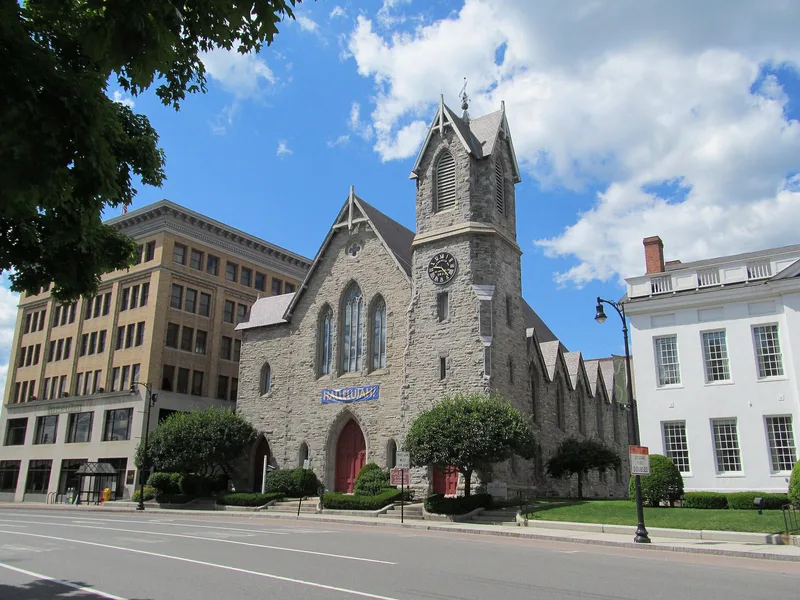
This boundary increase enlarges the Park Square Historic District in the center of Pittsfield, Massachusetts. Park Square is an oval green given to the town in 1790, and the added area spreads along North, South, Wendell and Allen Streets. It contains 38 contributing and eight noncontributing resources. North Street has continuous Victorian commercial facades, including banks and the England Brothers department store. South Street combines churches, a Masonic Temple, the Berkshire Museum, the Berkshire Place home for elderly women and the Colonial Theatre, designed by Joseph McArthur Vance in 1903. Wendell Avenue holds houses in Italian Villa, Queen Anne, Colonial Revival and Shingle styles, including the Thomas Colt House. The northeast corner continues the square's municipal role with the police department, old fire station and the former post office, now City Hall. The extension was added because it preserves the civic, religious, commercial and residential character of the city center, with a high level of exterior integrity.
Machine-generated summary. This summary was generated by a language model from the official nomination document and has not been reviewed line by line by an editor. It may contain errors. Check the source document before relying on any detail. Source: nomination document (PDF) · catalog entry. Generated October 2026 (model claude-sonnet-5-5, prompt v1.0-2026-10-29).
| Styles | Federal, Greek Revival, Classical Revival, Renaissance Revival, Eastlake, Gothic Revival, Queen Anne, Romanesque Revival, Shingle, High Victorian Gothic, Italianate, Neoclassical Revival, Eclectic |
|---|---|
| Areas of significance | Community Planning and Development, Architecture |
| Acreage | 27.4 |
| Boundary source | NPS cultural-resource GIS polygon |
| Full listing page | Park Square Historic District (Boundary Increase) (property record) |
What listing means for this property
This is a historic district. Buildings within its boundary are either contributing (they add to the district's significance) or non-contributing. Owners of contributing income-producing buildings can claim the 20% federal rehabilitation tax credit; homeowners should look at state credits. National Register districts impose no design review by themselves; a local historic district ordinance, if one exists, does (the difference explained).
General information, not legal or tax advice. Rules change; confirm with your State Historic Preservation Office or a qualified adviser.