Paine Hollow Road South Historic District

Why it's listed
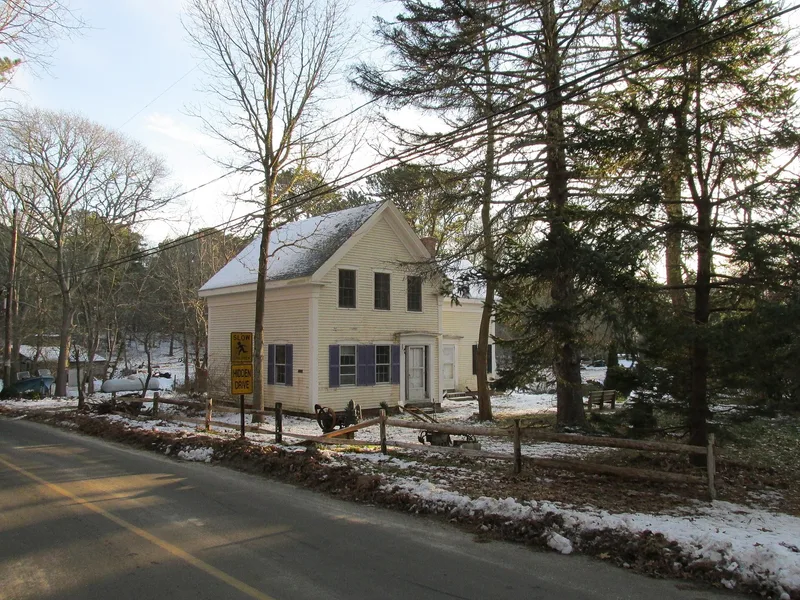
Paine Hollow Road South is a small residential district in Wellfleet, Massachusetts, where seven mid-19th-century houses and their outbuildings sit among trees along the road leading toward Blackfish Creek. Most are 1 1/2-story, gablefront dwellings in the Greek Revival or Cape Cod tradition, with sidehall plans, cornice returns, and clapboard or shingle siding. Many were built around 1850 for members of the Paine family, who worked as fishermen, mackerel captains, and fish inspectors connected to the local wharf. One house, the Whorf-Paine House of 1867, was built by Zoeth Sparrow, and another was moved to the road from across the creek in 1866. The district was recognized for its architecture and for what it shows about the community's development, with family ties and shared stylistic details giving the group its unity. The form also points to a high likelihood of archaeological remains, including earlier house sites and privies and wells.
Machine-generated summary. This summary was generated by a language model from the official nomination document and has not been reviewed line by line by an editor. It may contain errors. Check the source document before relying on any detail. Source: nomination document (PDF) · catalog entry. Generated October 2026 (model claude-sonnet-5-5, prompt v1.0-2026-10-29).
| Period of significance | c. 1834-1948 |
|---|---|
| Styles | Early 19th century; Cape Cod; Greek Revival |
| Areas of significance | Architecture, Community Planning and Development |
| Acreage | 13 |
| Boundary source | NPS cultural-resource GIS polygon |
| Full listing page | Paine Hollow Road South Historic District (property record) |
What listing means for this property
This is a historic district. Buildings within its boundary are either contributing (they add to the district's significance) or non-contributing. Owners of contributing income-producing buildings can claim the 20% federal rehabilitation tax credit; homeowners should look at state credits. National Register districts impose no design review by themselves; a local historic district ordinance, if one exists, does (the difference explained).
General information, not legal or tax advice. Rules change; confirm with your State Historic Preservation Office or a qualified adviser.