Outing Park Historic District

Why it's listed
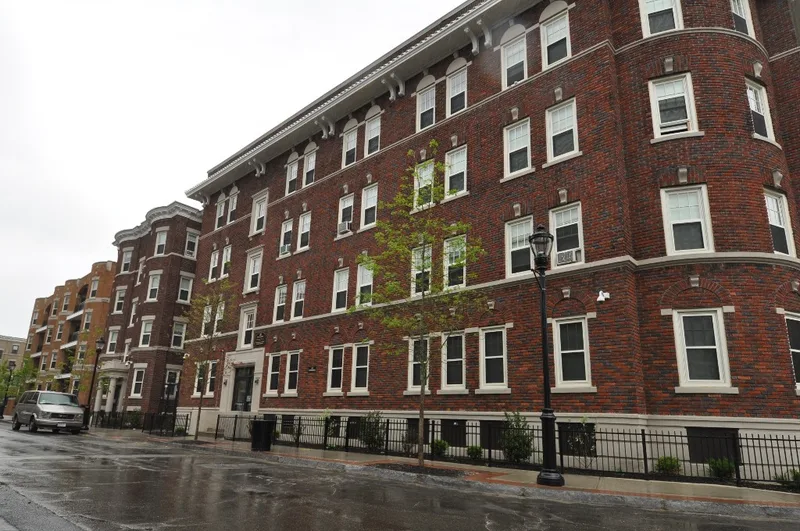
Outing Park is a compact neighborhood of 23 four-story brick apartment buildings at the southern edge of downtown Springfield, Massachusetts. Built between 1914 and 1926 by the development firm Gagnier & Angers, the buildings stand close to the street along short, tree-lined roads east of Main Street. The earlier buildings, dating before 1917, use Georgian Revival styling with bowed bays and small porticoes. Later buildings, up to 1926, are larger and show Classical Revival details in cast stone, including keystones, quoins and heavy cornices. The original development once included 44 buildings, but twenty that had become badly run down were removed by the city's redevelopment authority, leaving the surviving core largely intact. Alterations are mostly limited to replaced doors and windows, and many interiors keep their vestibules, stairhalls and trim. The district was listed for its architecture and its role in community planning and development, as the largest group of apartment blocks the firm built in the city. Nearly all buildings remain in residential use.
Machine-generated summary. This summary was generated by a language model from the official nomination document and has not been reviewed line by line by an editor. It may contain errors. Check the source document before relying on any detail. Source: nomination document (PDF) · catalog entry. Generated October 2026 (model claude-sonnet-5-5, prompt v1.0-2026-10-29).
| Period of significance | 1914-1962 |
|---|---|
| Styles | Late 19th & 20th Century Revivals: Georgian Revival, Classical Revival |
| Areas of significance | Architecture, Community Planning and Development |
| Acreage | 4 |
| Boundary source | NPS cultural-resource GIS polygon |
| Full listing page | Outing Park Historic District (property record) |
What listing means for this property
This is a historic district. Buildings within its boundary are either contributing (they add to the district's significance) or non-contributing. Owners of contributing income-producing buildings can claim the 20% federal rehabilitation tax credit; homeowners should look at state credits. National Register districts impose no design review by themselves; a local historic district ordinance, if one exists, does (the difference explained).
General information, not legal or tax advice. Rules change; confirm with your State Historic Preservation Office or a qualified adviser.