Old Village Historic District

Why it's listed
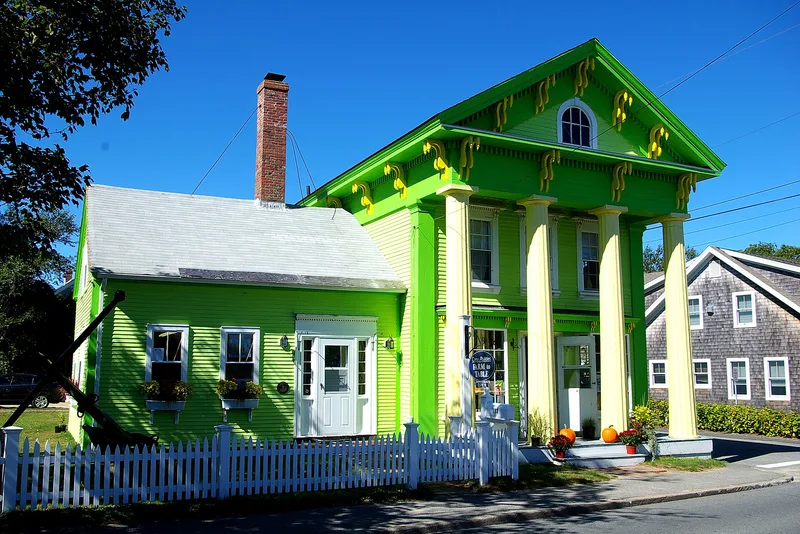
Chatham's Old Village occupies the southeast corner of the town on Cape Cod, bounded by Chatham Harbor on the east and Mill Pond and Little Mill Pond on the west. It is a densely built residential neighborhood of narrow, tree-shaded streets, most laid out by 1880. The district holds 220 contributing resources, including traditional Cape Cod cottages, Greek Revival houses, and Italianate, Queen Anne and Colonial Revival buildings. The oldest known house, the Solomon Collins House, dates to about 1730. Settlement grew after 1808, when the federal government built lighthouses at James Head, and the area shifted toward the harbor in the early 19th century. The Chatham Light Station, Chatham Light Park with its memorials, and the Sailors' Cemetery are also within the boundaries. Most buildings are small, wood-framed, one-and-a-half to two stories, and set close to the street. The district is considered significant as a well-preserved example of a Cape Cod village shaped by maritime trade and summer resort use between about 1730 and 1945.
Machine-generated summary. This summary was generated by a language model from the official nomination document and has not been reviewed line by line by an editor. It may contain errors. Check the source document before relying on any detail. Source: nomination document (PDF) · catalog entry. Generated October 2026 (model claude-sonnet-5-5, prompt v1.0-2026-10-29).
| Period of significance | ca. 1730-1945 |
|---|---|
| Styles | Mixed: Georgian, Federal, Greek Revival, Gothic Revival, Queen Anne, Italianate, Colonial Revival |
| Areas of significance | Architecture, Commerce, Community Planning and Development, Entertainment/Recreation, Maritime History |
| Acreage | 95 |
| Boundary source | NPS cultural-resource GIS polygon |
| Full listing page | Old Village Historic District (property record) |
What listing means for this property
This is a historic district. Buildings within its boundary are either contributing (they add to the district's significance) or non-contributing. Owners of contributing income-producing buildings can claim the 20% federal rehabilitation tax credit; homeowners should look at state credits. National Register districts impose no design review by themselves; a local historic district ordinance, if one exists, does (the difference explained).
General information, not legal or tax advice. Rules change; confirm with your State Historic Preservation Office or a qualified adviser.