Old Town Historic District

Why it's listed
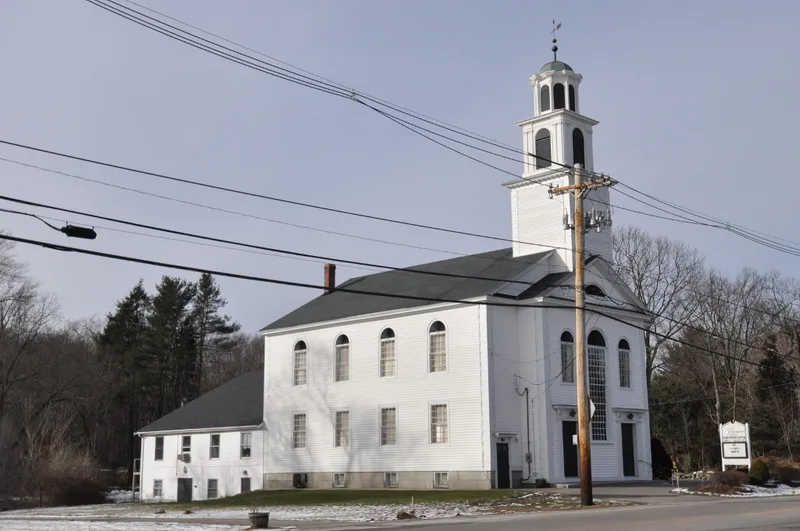
Old Town is a crossroads settlement in the southwest corner of North Attleborough, Massachusetts, covering about one hundred acres along Old Post Road and Mount Hope Street. Once rural and now largely suburban, it holds twenty-three houses, a church, a former schoolhouse, a brick powderhouse, a mill dam, stone slab bridges and several archaeological sites. The 1828 First Congregational Church, built by local carpenter Ezra Walker, is the chief landmark, facing the ca. 1680 and ca. 1731 Captain John Stearns House across the intersection. The 1768 town powderhouse and a Greek Revival district schoolhouse add to the civic core. Farmhouses to the north show Georgian, Federal and Greek Revival styles, while streetcar-era houses and an ice company's villas reflect later growth. The district was listed for its role as the earliest town center of old Attleborough, which existed from 1694 to 1887, and for its architecture and well-preserved landscape of fields, stone walls and roadside lawns.
Machine-generated summary. This summary was generated by a language model from the official nomination document and has not been reviewed line by line by an editor. It may contain errors. Check the source document before relying on any detail. Source: nomination document (PDF) · catalog entry. Generated October 2026 (model claude-sonnet-5-5, prompt v1.0-2026-10-29).
| Period of significance | Ca. 1781-1937 |
|---|---|
| Styles | Colonial/Georgian; Early Republic/Federal; Mid-19th Century/Greek Revival; Late Victorian/Queen Anne, Stick/Eastlake; Colonial Revival; Classical Revival |
| Areas of significance | Industry, Community Planning and Development, Architecture |
| Acreage | 100 |
| Boundary source | NPS cultural-resource GIS polygon |
| Full listing page | Old Town Historic District (property record) |
What listing means for this property
This is a historic district. Buildings within its boundary are either contributing (they add to the district's significance) or non-contributing. Owners of contributing income-producing buildings can claim the 20% federal rehabilitation tax credit; homeowners should look at state credits. National Register districts impose no design review by themselves; a local historic district ordinance, if one exists, does (the difference explained).
General information, not legal or tax advice. Rules change; confirm with your State Historic Preservation Office or a qualified adviser.