Old Harbor Reservation Parkways, Metropolitan Park System of Greater Boston

Why it's listed
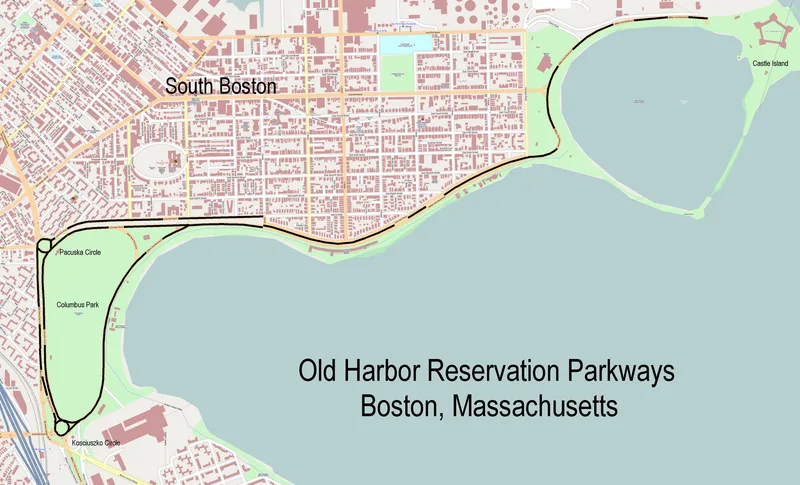
More than three miles of parkway line Old Harbor and Dorchester Bay in South Boston. The district includes William J. Day Boulevard, once known as the Strandway and Gardner Way, along with Columbia Road and part of Old Colony Avenue. The Boston Park Commission built the roads, and they passed to the Metropolitan District Commission between 1949 and 1955. The Strandway, developed from the 1890s, was one of the Olmsted firm's major planning and engineering projects. It required demolishing existing yacht clubs and shipyards, extensive landfill and a granite block sea wall topped by an iron railing. Columbia Road was laid out under the 1897 Parkways Act as a continuous route between Franklin Park and Farragut Road. Contributing features include the Farragut Rotary and Farragut Monument, a planted median with surviving early lampposts, and granite and Belgian-block curbing. Beaches, bathhouses, boat clubs and parks beside the roads shape the setting but lie outside the district boundary.
Machine-generated summary. This summary was generated by a language model from the official nomination document and has not been reviewed line by line by an editor. It may contain errors. Check the source document before relying on any detail. Source: nomination document (PDF) · catalog entry. Generated October 2026 (model claude-sonnet-5-5, prompt v1.0-2026-10-29).
| Areas of significance | Community Planning and Development, Conservation, Engineering, Entertainment/Recreation, Landscape Architecture, Transportation |
|---|---|
| Acreage | 55.8 |
| Boundary source | NPS cultural-resource GIS polygon |
| Full listing page | Old Harbor Reservation Parkways, Metropolitan Park System of Greater Boston (property record) |
What listing means for this property
This is a historic district. Buildings within its boundary are either contributing (they add to the district's significance) or non-contributing. Owners of contributing income-producing buildings can claim the 20% federal rehabilitation tax credit; homeowners should look at state credits. National Register districts impose no design review by themselves; a local historic district ordinance, if one exists, does (the difference explained).
General information, not legal or tax advice. Rules change; confirm with your State Historic Preservation Office or a qualified adviser.