Northfield Main Street Historic District

Why it's listed
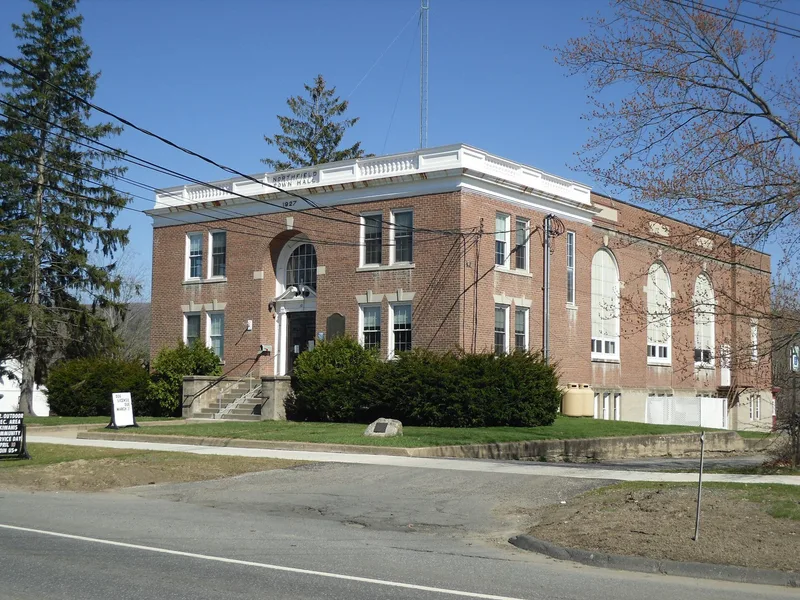
Northfield's Main Street runs two miles along a gentle rise above the Connecticut River, following the line of the original Town Street laid out in the late seventeenth century. About 135 structures, mostly houses, sit on deep lots with generous setbacks, maples and elms, and views of fields and hills behind. Eighteenth-century frame houses stand beside Federal and Greek Revival homes, a brick Federal house, a Shingle Style residence and a granite Richardsonian Romanesque library built in 1897. Much of the early nineteenth-century character comes from the Stearns family. Calvin and Samuel Stearns arrived in 1799 and, with Calvin's sons and local carpenters, built many houses along the street. Their account and day books survive and document specific buildings and craftsmen. The street also served as the town's center through repeated settlement and abandonment during the colonial period, and it is linked to Moody's seminary and conferences. Prehistoric archaeological potential adds to its importance.
Machine-generated summary. This summary was generated by a language model from the official nomination document and has not been reviewed line by line by an editor. It may contain errors. Check the source document before relying on any detail. Source: nomination document (PDF) · catalog entry. Generated October 2026 (model claude-sonnet-5-5, prompt v1.0-2026-10-29).
| Styles | Second Period, Federal, Greek Revival, Shingle Style, Richardsonian Romanesque |
|---|---|
| Areas of significance | Exploration/Settlement, Architecture |
| Acreage | 124.9 |
| Boundary source | NPS cultural-resource GIS polygon |
| Full listing page | Northfield Main Street Historic District (property record) |
What listing means for this property
This is a historic district. Buildings within its boundary are either contributing (they add to the district's significance) or non-contributing. Owners of contributing income-producing buildings can claim the 20% federal rehabilitation tax credit; homeowners should look at state credits. National Register districts impose no design review by themselves; a local historic district ordinance, if one exists, does (the difference explained).
General information, not legal or tax advice. Rules change; confirm with your State Historic Preservation Office or a qualified adviser.