North High Street Historic District

Why it's listed
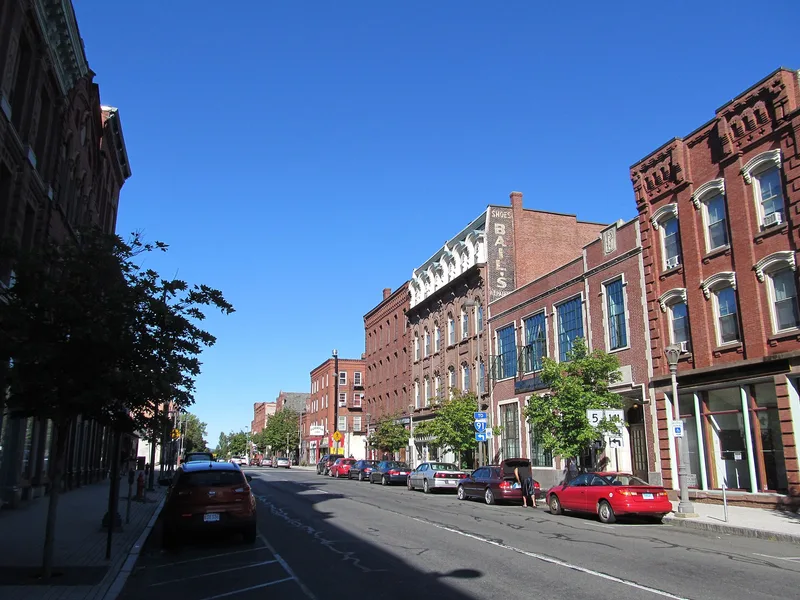
North High Street in Holyoke, Massachusetts, is a two-block commercial corridor of 37 buildings, most of them brick, lying between Dwight and Lyman Streets. Once known as "the Hill," it grew as one of the city's two major business centers during the mid-nineteenth century. The oldest surviving building is the Gallaudet Block, built around 1847. Most of the rest went up in the 1860s and 1870s, many for local businessmen such as Roswell P. Crafts and John Fuller. Earlier buildings are plain, with corbelled brick cornices, while post-Civil War blocks add round-arched windows, stone and iron trim, and elaborate cornices in the Italianate manner. Later additions include the six-story Ball Block of 1898 and a Jacobethan Revival building from about 1925. Storefronts have often been altered, but upper floors are largely intact. The district was listed because it is the largest and most coherent group of nineteenth-century commercial buildings left in Holyoke.
Machine-generated summary. This summary was generated by a language model from the official nomination document and has not been reviewed line by line by an editor. It may contain errors. Check the source document before relying on any detail. Source: nomination document (PDF) · catalog entry. Generated October 2026 (model claude-sonnet-5-5, prompt v1.0-2026-10-29).
| Styles | Italianate (predominant), with Second Empire, Victorian Gothic, Italian Renaissance palazzo and Jacobethan Revival examples |
|---|---|
| Areas of significance | Community Planning and Development, Commerce, Architecture |
| Acreage | 6 |
| Boundary source | NPS cultural-resource GIS polygon |
| Full listing page | North High Street Historic District (property record) |
What listing means for this property
This is a historic district. Buildings within its boundary are either contributing (they add to the district's significance) or non-contributing. Owners of contributing income-producing buildings can claim the 20% federal rehabilitation tax credit; homeowners should look at state credits. National Register districts impose no design review by themselves; a local historic district ordinance, if one exists, does (the difference explained).
General information, not legal or tax advice. Rules change; confirm with your State Historic Preservation Office or a qualified adviser.