Normal School Historic District

Why it's listed
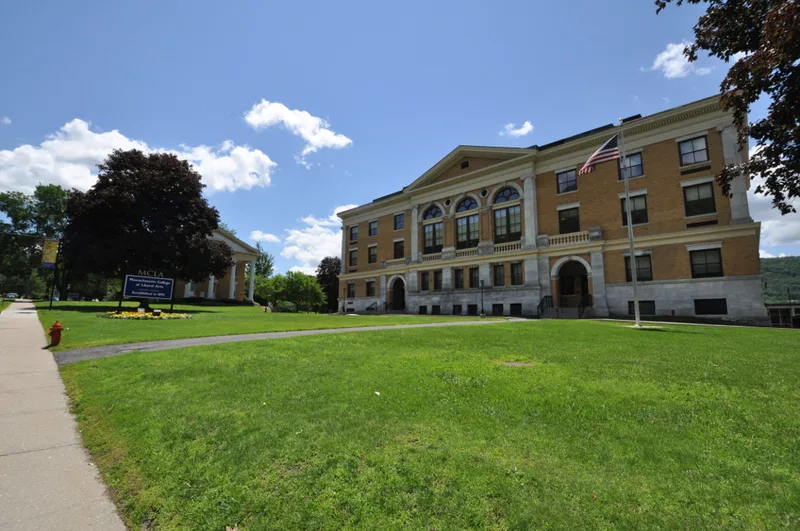
Ten buildings line Church Street in the south end of North Adams, forming a group of well-detailed late Victorian architecture from the 1890s. Two belong to the State Normal School, founded to train public school teachers: Murdock Hall, a yellow brick Renaissance Revival building, and the Principal's House, a Classical Revival building with a columned portico. Both were designed by H. Neil Wilson of Pittsfield and completed in 1897. Across and along the street stand eight large houses in Queen Anne and Colonial Revival styles, built for merchants and business owners who prospered during the city's industrial peak. One Queen Anne house, the Hawkins House, was built from mail-order plans by George F. Barber. The neighborhood developed alongside the school and was then the fastest growing part of the city. Newer college buildings and altered houses were left outside the boundary, so the district keeps its original character, with the school buildings still in educational use.
Machine-generated summary. This summary was generated by a language model from the official nomination document and has not been reviewed line by line by an editor. It may contain errors. Check the source document before relying on any detail. Source: nomination document (PDF) · catalog entry. Generated October 2026 (model claude-sonnet-5-5, prompt v1.0-2026-10-29).
| Period of significance | 1890-1900 |
|---|---|
| Styles | Queen Anne, Colonial Revival, Renaissance Revival (Murdock Hall), Classical Revival (Principal's House) |
| Areas of significance | Community Planning and Development, Architecture |
| Acreage | 80 |
| Boundary source | NPS cultural-resource GIS polygon |
| Full listing page | Normal School Historic District (property record) |
What listing means for this property
This is a historic district. Buildings within its boundary are either contributing (they add to the district's significance) or non-contributing. Owners of contributing income-producing buildings can claim the 20% federal rehabilitation tax credit; homeowners should look at state credits. National Register districts impose no design review by themselves; a local historic district ordinance, if one exists, does (the difference explained).
General information, not legal or tax advice. Rules change; confirm with your State Historic Preservation Office or a qualified adviser.