New Salem Common Historic District

Why it's listed
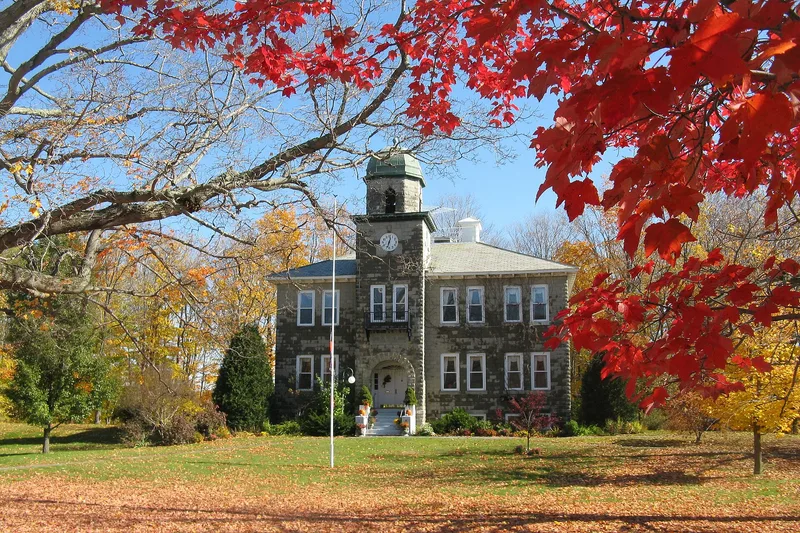
Centered on a two-acre common set aside by the first proprietors of a plantation granted in 1734, this New Salem district extends along South Main Street at roughly 1,000 feet elevation. It holds 43 buildings and sites, mostly from the 19th century, among shaded streets, stone walls and open space. Anchors include the First Congregational Church of 1794, the Third Congregational Church of 1854, the Old Academy of 1838, the 1908 New Salem Academy building with its clock tower, and the Old Town Hall of 1838, built with surplus federal revenue. Center Cemetery, begun with a stone dated 1745, the Town Pound, and several memorial markers add to the group. After the Revolution the town prospered through farming, lumbering and stagecoach trade, then declined once railroads bypassed it. Fires destroyed many records, so the surviving buildings serve as the main evidence of the town's past, including the academy chartered in 1795.
Machine-generated summary. This summary was generated by a language model from the official nomination document and has not been reviewed line by line by an editor. It may contain errors. Check the source document before relying on any detail. Source: nomination document (PDF) · catalog entry. Generated October 2026 (model claude-sonnet-5-5, prompt v1.0-2026-10-29).
| Styles | Mixed styles including Federal, Greek Revival and Gothic-arched meetinghouse details; bungalow and Mansard-roofed buildings |
|---|---|
| Areas of significance | Architecture |
| Acreage | 35 |
| Boundary source | NPS cultural-resource GIS polygon |
| Full listing page | New Salem Common Historic District (property record) |
What listing means for this property
This is a historic district. Buildings within its boundary are either contributing (they add to the district's significance) or non-contributing. Owners of contributing income-producing buildings can claim the 20% federal rehabilitation tax credit; homeowners should look at state credits. National Register districts impose no design review by themselves; a local historic district ordinance, if one exists, does (the difference explained).
General information, not legal or tax advice. Rules change; confirm with your State Historic Preservation Office or a qualified adviser.