Monument Park Historic District

Why it's listed
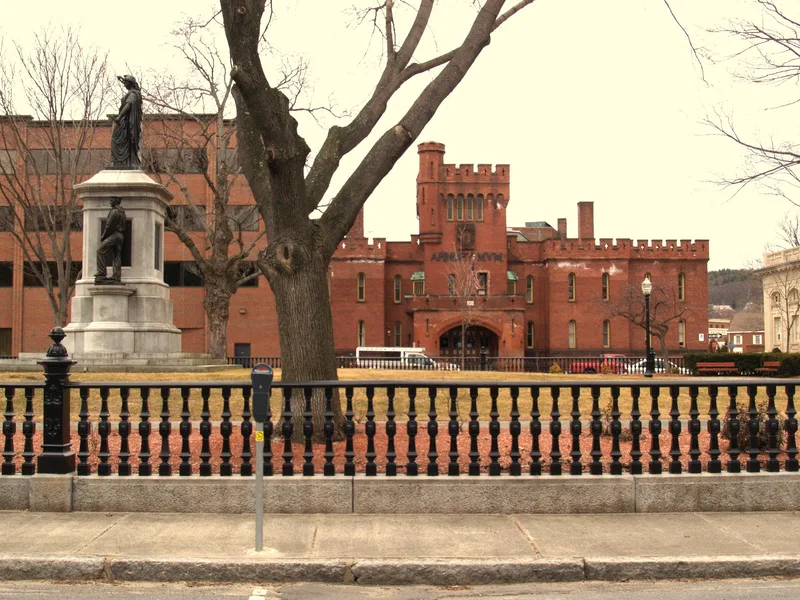
Monument Park Historic District in downtown Fitchburg groups twelve commercial, residential and civic buildings around a two-thirds-acre formal park laid out in 1874. At its center stands a granite Civil War monument by Martin Milmore, dedicated to the 142 Fitchburg citizens who died in the war. Surrounding buildings include Richard Upjohn's granite Christ Church of 1868, the High Victorian Gothic county courthouse of 1871, the 1891 brick Armory, and the granite Classical Revival Post Office of 1903. The oldest remaining building is the 1844 Trinitarian Church, founded by Congregationalists opposed to slavery and visited by abolitionist speakers. Growth followed the arrival of the railroad in 1845 and continued until about 1910. Local architect H. M. Francis designed three district buildings and remodeled two others. The district was largely built as an expression of civic pride and, until 1974, was surrounded by buildings serving four levels of government. Its mix of styles still reads as a harmonious group.
Machine-generated summary. This summary was generated by a language model from the official nomination document and has not been reviewed line by line by an editor. It may contain errors. Check the source document before relying on any detail. Source: nomination document (PDF) · catalog entry. Generated October 2026 (model claude-sonnet-5-5, prompt v1.0-2026-10-29).
| Period of significance | 1800-1899 |
|---|---|
| Styles | Gothic Revival, Mansard, Romanesque and Neo-Classical styles (including High Victorian Gothic, Classical Revival and Queen Anne buildings) |
| Areas of significance | Community Planning and Development, Art, Architecture, Social History |
| Acreage | 5 |
| Boundary source | NPS cultural-resource GIS polygon |
| Full listing page | Monument Park Historic District (property record) |
What listing means for this property
This is a historic district. Buildings within its boundary are either contributing (they add to the district's significance) or non-contributing. Owners of contributing income-producing buildings can claim the 20% federal rehabilitation tax credit; homeowners should look at state credits. National Register districts impose no design review by themselves; a local historic district ordinance, if one exists, does (the difference explained).
General information, not legal or tax advice. Rules change; confirm with your State Historic Preservation Office or a qualified adviser.