Mill Way Historic District

Why it's listed
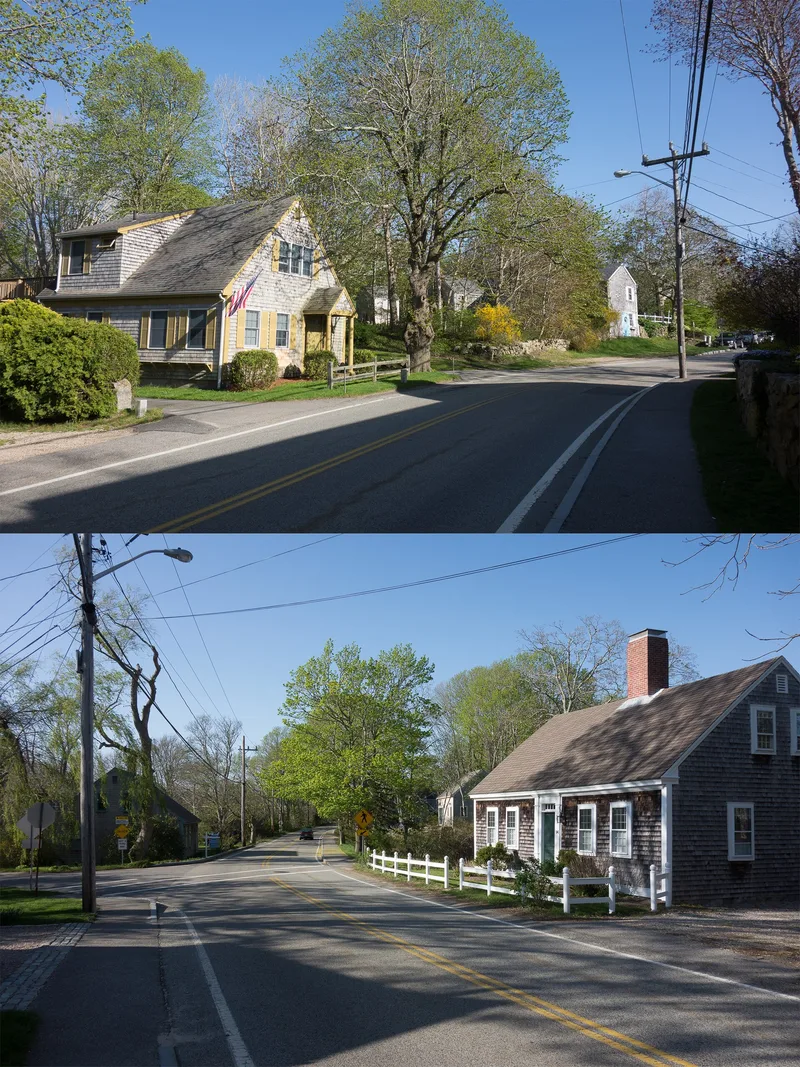
Mill Way is a short road in Barnstable Village that once led to Barnstable Harbor, and the district along it contains 15 early houses on about 15 acres, with barns, garages and sheds. The buildings range from the David Bursley House of about 1750 to Greek Revival and Colonial Revival examples, all of wood-frame construction and set close to the street. Maritime trades shaped the area. Abraham Blish built a tidal grist mill here as early as 1657, and shipbuilding became prominent in the early 19th century, with builder William Lewis launching the 186-ton brig Cummaquid in 1836. Salt manufacture by solar evaporation was another early 19th-century industry, and Loring Crocker won a silver medal for salt in 1828. Many houses were built by men who worked the sea. The period of significance runs from about 1657 to about 1900, when maritime activity declined. The northern boundary excludes modern maritime industries.
Machine-generated summary. This summary was generated by a language model from the official nomination document and has not been reviewed line by line by an editor. It may contain errors. Check the source document before relying on any detail. Source: nomination document (PDF) · catalog entry. Generated October 2026 (model claude-sonnet-5-5, prompt v1.0-2026-10-29).
| Period of significance | c1657-c1900 |
|---|---|
| Styles | Georgian, Federal, Greek Revival and Colonial Revival |
| Areas of significance | Industry, Architecture, Maritime History |
| Acreage | 15 |
| Boundary source | NPS cultural-resource GIS polygon |
| Full listing page | Mill Way Historic District (property record) |
What listing means for this property
This is a historic district. Buildings within its boundary are either contributing (they add to the district's significance) or non-contributing. Owners of contributing income-producing buildings can claim the 20% federal rehabilitation tax credit; homeowners should look at state credits. National Register districts impose no design review by themselves; a local historic district ordinance, if one exists, does (the difference explained).
General information, not legal or tax advice. Rules change; confirm with your State Historic Preservation Office or a qualified adviser.