Middlesex Canal

Why it's listed
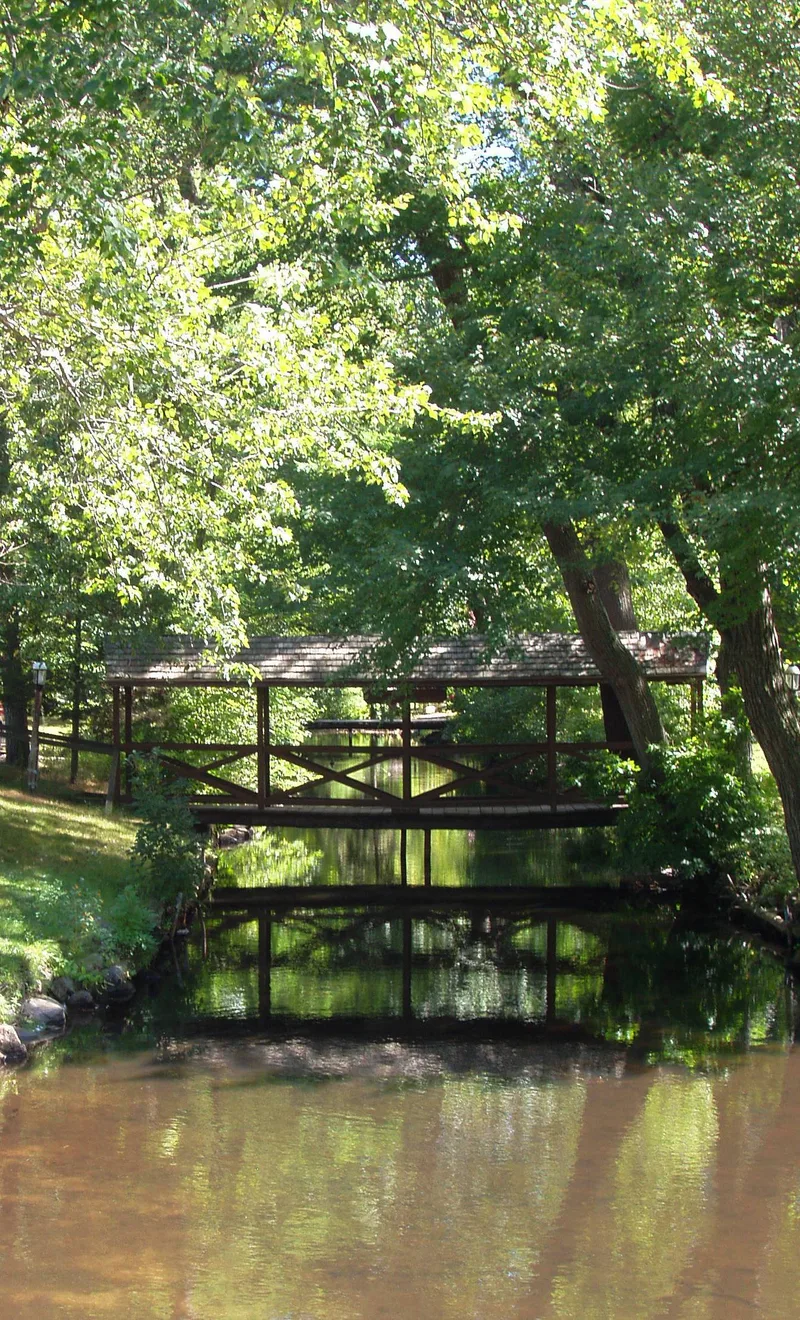
Running 27.25 miles from the Merrimack River at Lowell to the Charles River in Boston, the Middlesex Canal was completed in 1803, ten years after its incorporation. Planned under James Sullivan and engineered by Loammi Baldwin, it originally had twenty locks, eight aqueducts and forty-eight bridges, with the Concord River at North Billerica as its main water supply. The nomination describes it as the oldest canal of its size in the United States and a model for the Erie Canal, which New York officials came to study in 1817. Baldwin introduced hydraulic cement and the wye level to American work, and a steam tug was tried on the canal in 1812. Traffic peaked in the 1820s and 1830s, then declined after the Boston and Lowell Railroad opened in 1835. Operations ceased by 1853. Today the Shawsheen Aqueduct piers and stretches of trough and towpath survive, while much of the eastern route has been lost to development.
Machine-generated summary. This summary was generated by a language model from the official nomination document and has not been reviewed line by line by an editor. It may contain errors. Check the source document before relying on any detail. Source: nomination document (PDF) · catalog entry. Generated October 2026 (model claude-sonnet-5-5, prompt v1.0-2026-10-29).
| Period of significance | 19th Century (specific date 1803) |
|---|---|
| Areas of significance | Commerce, Engineering, Transportation |
| Acreage | 245 |
| Boundary source | NPS cultural-resource GIS polygon |
| Full listing page | Middlesex Canal (property record) |
What listing means for this property
This is a historic district. Buildings within its boundary are either contributing (they add to the district's significance) or non-contributing. Owners of contributing income-producing buildings can claim the 20% federal rehabilitation tax credit; homeowners should look at state credits. National Register districts impose no design review by themselves; a local historic district ordinance, if one exists, does (the difference explained).
General information, not legal or tax advice. Rules change; confirm with your State Historic Preservation Office or a qualified adviser.