Memorial Square District

Why it's listed
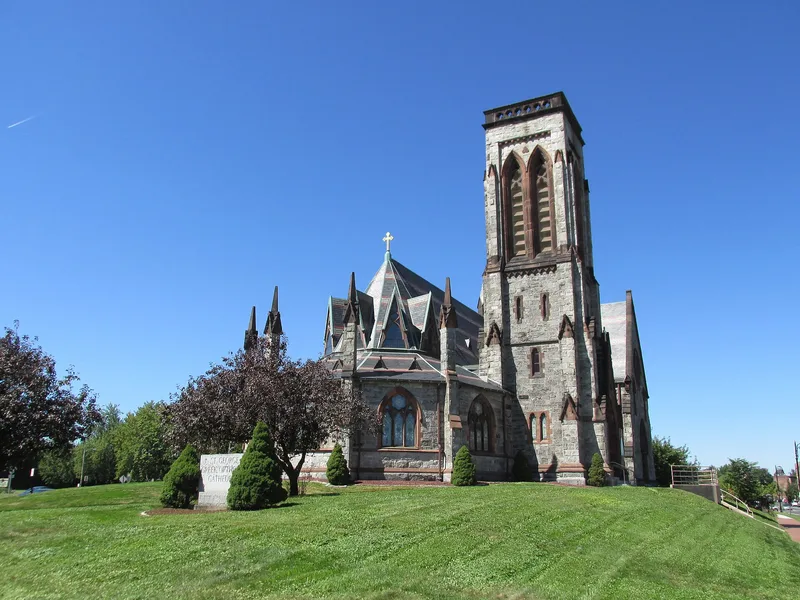
Memorial Square sits where Main and Plainfield Streets meet in northwestern Springfield, Massachusetts. The district groups seven buildings, a small triangular park and a traffic island around this junction. Memorial Church, a granite Gothic Revival building with brownstone trim designed by Richard Upjohn and his son and completed in 1866, is the focal point. Nearby are a 1914 Italian Renaissance library, an 1897 trolley barn and office building, a 1911 six-story apartment and store block, an 1894 Classical Revival parish house, and two Queen Anne houses from the 1880s. A bronze Spanish-American War statue stands in the park. The district was listed because it served as the center of the Brightwood and North End neighborhoods and because of its architecture, which includes work by nationally known and leading local architects. The buildings have changed little, although Round Hill was levelled and highway and urban renewal projects reshaped the surroundings.
Machine-generated summary. This summary was generated by a language model from the official nomination document and has not been reviewed line by line by an editor. It may contain errors. Check the source document before relying on any detail. Source: nomination document (PDF) · catalog entry. Generated October 2026 (model claude-sonnet-5-5, prompt v1.0-2026-10-29).
| Period of significance | 1800-1899 |
|---|---|
| Styles | Gothic Revival, Italian Renaissance adaptation, Classical Revival and Queen Anne |
| Areas of significance | Commerce, Art, Transportation, Architecture, Religion |
| Acreage | 6.5 |
| Boundary source | NPS cultural-resource GIS polygon |
| Full listing page | Memorial Square District (property record) |
What listing means for this property
This is a historic district. Buildings within its boundary are either contributing (they add to the district's significance) or non-contributing. Owners of contributing income-producing buildings can claim the 20% federal rehabilitation tax credit; homeowners should look at state credits. National Register districts impose no design review by themselves; a local historic district ordinance, if one exists, does (the difference explained).
General information, not legal or tax advice. Rules change; confirm with your State Historic Preservation Office or a qualified adviser.