McKnight District

Why it's listed
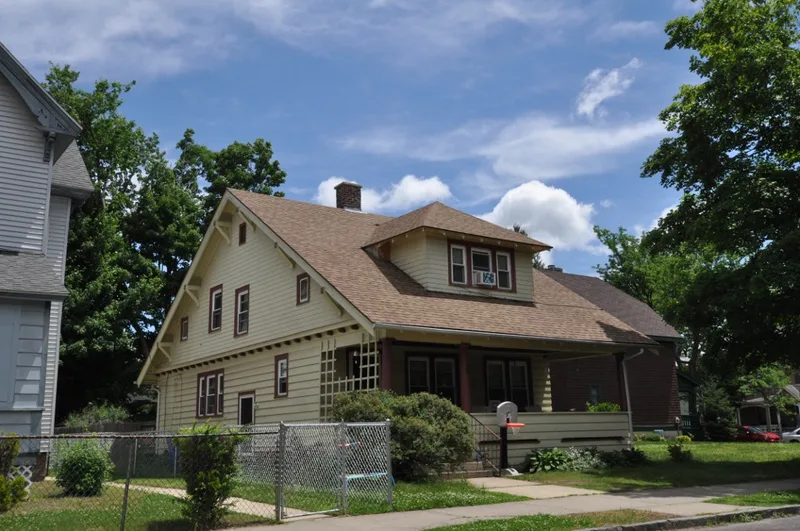
This 130-acre neighborhood in southwestern Springfield, Massachusetts, holds more than 350 houses laid out in the late nineteenth century by brothers John and William McKnight. Before 1870 the land held scattered farms, a ravine, a mineral spring and a black settlement near Lake Como. The McKnights bought the Flagg farm in 1870 and expanded in 1881. John planned streets, trees and shrubbery, while William directed construction of 25 to 40 houses a year. Five corner parks with fountains were set out, and part of the original grove was given to the city. Houses range through Italianate, Queen Anne, Shingle, Stick, Tudor and Colonial Revival designs, with Queen Anne dominating, and a consistent scale of two-and-a-half to three stories. The district is almost entirely residential, with two churches, a small store and a school built in 1887. It was Springfield's first large planned residential area and first suburb on the hill. Six mayors and basketball inventor James Naismith lived here. It became a local historic district in January 1976.
Machine-generated summary. This summary was generated by a language model from the official nomination document and has not been reviewed line by line by an editor. It may contain errors. Check the source document before relying on any detail. Source: nomination document (PDF) · catalog entry. Generated October 2026 (model claude-sonnet-5-5, prompt v1.0-2026-10-29).
| Styles | Predominantly Queen Anne, with Italianate-Bracketed, mansard, Shingle, Stick, Tudor and Colonial Revival houses |
|---|---|
| Areas of significance | Community Planning and Development, Architecture |
| Acreage | 130 |
| Boundary source | NPS cultural-resource GIS polygon |
| Full listing page | McKnight District (property record) |
What listing means for this property
This is a historic district. Buildings within its boundary are either contributing (they add to the district's significance) or non-contributing. Owners of contributing income-producing buildings can claim the 20% federal rehabilitation tax credit; homeowners should look at state credits. National Register districts impose no design review by themselves; a local historic district ordinance, if one exists, does (the difference explained).
General information, not legal or tax advice. Rules change; confirm with your State Historic Preservation Office or a qualified adviser.