Marconi-RCA Wireless Receiving Station

Why it's listed
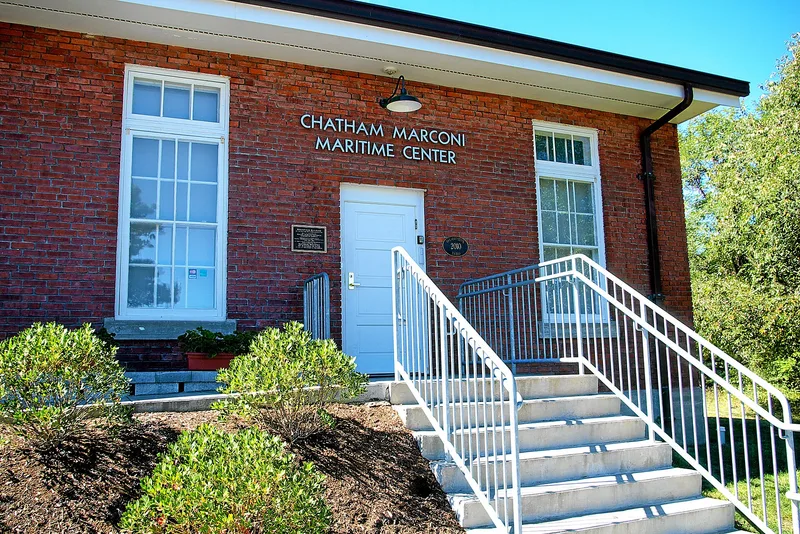
Built in 1914 on a gently sloping hillside above Ryder's Cove in Chathamport, this wireless receiving station is a campus of low red brick and shingled buildings arranged in a broad V. It includes a Main Operations Building, a Powerhouse, a Garage, a two-story Bachelors' Quarters/Hotel, six bungalow-style houses and three 100-foot steel antenna towers added in 1921. The J. G. White Construction Company built it for the Marconi Wireless Telegraph Company of America to handle transatlantic messages, as the successor to Marconi's South Wellfleet station. After the Radio Corporation of America took over Marconi's assets in 1919, the station became RCA's first to handle only marine traffic, linking ships at sea with shore customers. In 1921 it received the first commercial marine vacuum tube transmitting apparatus. Because the other early installations no longer survive, it is described as a rare example of its type. The buildings remain largely as constructed, with only minor losses.
Machine-generated summary. This summary was generated by a language model from the official nomination document and has not been reviewed line by line by an editor. It may contain errors. Check the source document before relying on any detail. Source: nomination document (PDF) · catalog entry. Generated October 2026 (model claude-sonnet-5-5, prompt v1.0-2026-10-29).
| Period of significance | 1914-1944 |
|---|---|
| Styles | Late 19th and Early 20th Century American Movements: Bungalow/Craftsman; No Style |
| Areas of significance | Architecture, Communications |
| Acreage | 11.3 |
| Boundary source | NPS cultural-resource GIS polygon |
| Full listing page | Marconi-RCA Wireless Receiving Station (property record) |
What listing means for this property
This is a historic district. Buildings within its boundary are either contributing (they add to the district's significance) or non-contributing. Owners of contributing income-producing buildings can claim the 20% federal rehabilitation tax credit; homeowners should look at state credits. National Register districts impose no design review by themselves; a local historic district ordinance, if one exists, does (the difference explained).
Noted as vacant in the nomination. Nomination documents can be decades old; current status may differ. If you are considering buying an empty listed property, read the due-diligence checklist.
General information, not legal or tax advice. Rules change; confirm with your State Historic Preservation Office or a qualified adviser.