Main Street Historic District (Additional Documentation)

Why it's listed
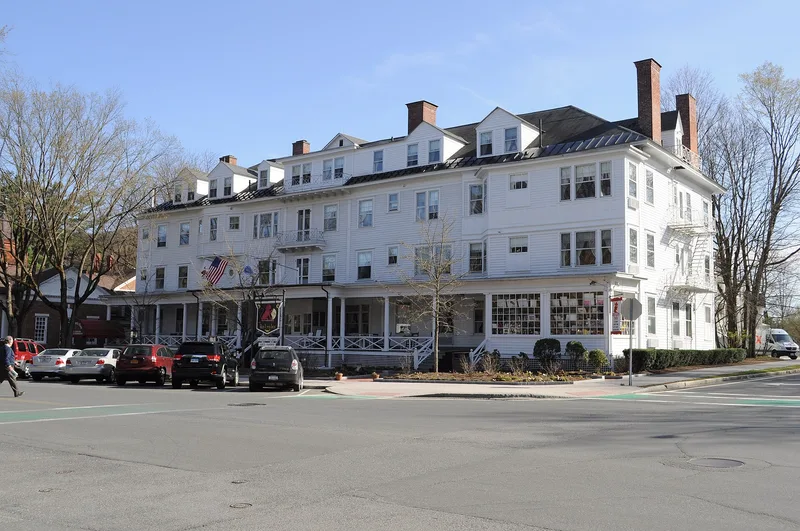
Main Street in Stockbridge, Massachusetts, forms the spine of the town's historic central village, known historically as the Plain. The mile-long district runs from Tuckerman Bridge over the Housatonic River to Laurel Hill park, taking in the Town Square, an Indian Burial Ground that predates English settlement, the Red Lion Inn, churches, a library, a school and large Federal mansions. Monuments mark most intersections, including the Jonathan Edwards column, the Cat and Dog Fountain and a Civil War memorial. Mission House, a 1750s Georgian building moved here and restored in 1928, is a museum on the street. Of 110 contributing resources, only nine outbuildings do not contribute. The district reflects the area's shift from a Mohican settlement and mission to a Federal-era home for prosperous lawyers and merchants, then a summer resort and tourist destination. Since 1853 the Laurel Hill Association has overseen the village's appearance, keeping signage and clutter to a minimum.
Machine-generated summary. This summary was generated by a language model from the official nomination document and has not been reviewed line by line by an editor. It may contain errors. Check the source document before relying on any detail. Source: nomination document (PDF) · catalog entry. Generated October 2026 (model claude-sonnet-5-5, prompt v1.0-2026-10-29).
| Styles | Colonial: Georgian; Early Republic: Federal; Mid-19th Century: Greek Revival, Gothic Revival, Italian Villa; Late 19th and 20th Century Revivals: Colonial Revival, Tudor Revival |
|---|---|
| Areas of significance | Architecture, Community Planning and Development |
| Acreage | 162.1 |
| Boundary source | NPS cultural-resource GIS polygon |
| Full listing page | Main Street Historic District (Additional Documentation) (property record) |
What listing means for this property
This is a historic district. Buildings within its boundary are either contributing (they add to the district's significance) or non-contributing. Owners of contributing income-producing buildings can claim the 20% federal rehabilitation tax credit; homeowners should look at state credits. National Register districts impose no design review by themselves; a local historic district ordinance, if one exists, does (the difference explained).
General information, not legal or tax advice. Rules change; confirm with your State Historic Preservation Office or a qualified adviser.