Luther's Corner

The National Park Service has not published a boundary polygon for this district; the map shows the listed properties inside it and the district's reference point.
Why it's listed
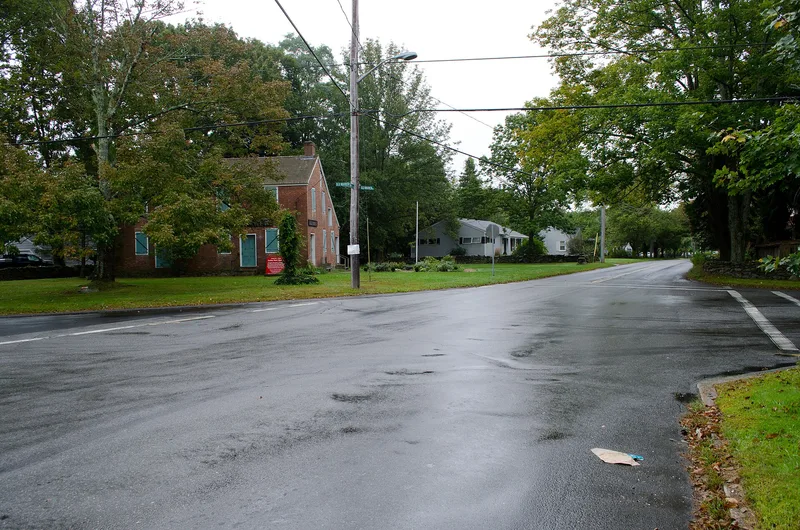
Luther's Corner is a four-building crossroads district in Swansea, Massachusetts, where Old Warren Road, Maple Avenue and Pearse Road meet. Its buildings include the James Luther Tavern, built about 1800 to 1812, the John Brown-Luther House of about 1811, the brick Luther Store of 1815 to 1818, and the Seth Wilbur Eddy House and Store of about 1871. Most are Federal in style, and the Eddy building is vernacular. The corner grew up around a stage stop on the Great Road to Warren, Rhode Island, and later became the town's main commercial center. The Luther family ran the tavern and the store, which operated until 1903 and still holds its original fixtures. The Eddy store housed the post office from 1889 to 1907. Trolley service replaced a central green in 1901, and traffic now dominates the intersection. The buildings remain well preserved and mostly residential, and they recall the village's 19th century commercial life.
Machine-generated summary. This summary was generated by a language model from the official nomination document and has not been reviewed line by line by an editor. It may contain errors. Check the source document before relying on any detail. Source: nomination document (PDF) · catalog entry. Generated October 2026 (model claude-sonnet-5-5, prompt v1.0-2026-10-29).
| Period of significance | 1800-1907 |
|---|---|
| Styles | Federal; vernacular (Eddy House and Store) |
| Areas of significance | Community Planning and Development, Exploration/Settlement, Architecture |
| Acreage | 1.5 |
| Boundary source | not published |
| Full listing page | Luther's Corner (property record) |
What listing means for this property
This is a historic district. Buildings within its boundary are either contributing (they add to the district's significance) or non-contributing. Owners of contributing income-producing buildings can claim the 20% federal rehabilitation tax credit; homeowners should look at state credits. National Register districts impose no design review by themselves; a local historic district ordinance, if one exists, does (the difference explained).
General information, not legal or tax advice. Rules change; confirm with your State Historic Preservation Office or a qualified adviser.