Ludlow Center Historic District

Why it's listed
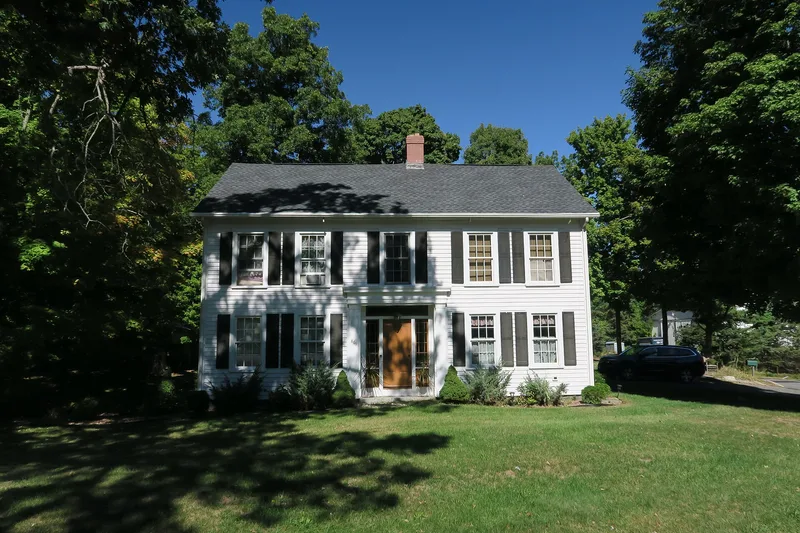
Ludlow Center is a small rural village at the geographic center of Ludlow, Massachusetts, where the town's first meetinghouse and burial ground were placed. Its 27 acres hold twelve buildings, mostly white-clapboarded and modest in scale, with a triangular common at the heart. The 1783-1784 First Meeting House, a late example of the barn-type colonial meetinghouse, anchors the district, alongside Fuller Cemetery, the 1811 Theodore Sikes House, the 1844 Increase Sikes House, an 1865 Greek Revival chapel, an 1866 Italianate house and an 1875 parsonage. Mill development on the Chicopee River from 1810 drew growth to Jencksville, and town meetings and records moved there in 1893. With its civic functions gone, the Center saw almost no development for roughly ninety years. Surrounding wetlands and uplands further insulated it. The area was recognized for its role as the original town center and for its well-preserved village architecture. The district also has archaeological potential.
Machine-generated summary. This summary was generated by a language model from the official nomination document and has not been reviewed line by line by an editor. It may contain errors. Check the source document before relying on any detail. Source: nomination document (PDF) · catalog entry. Generated October 2026 (model claude-sonnet-5-5, prompt v1.0-2026-10-29).
| Period of significance | 1783-1912 |
|---|---|
| Styles | Colonial - Georgian; Early Republic - Federal; Mid-19th Century - Greek Revival; Late Victorian - Italianate |
| Areas of significance | Community Planning and Development, Architecture |
| Acreage | 27 |
| Boundary source | NPS cultural-resource GIS polygon |
| Full listing page | Ludlow Center Historic District (property record) |
What listing means for this property
This is a historic district. Buildings within its boundary are either contributing (they add to the district's significance) or non-contributing. Owners of contributing income-producing buildings can claim the 20% federal rehabilitation tax credit; homeowners should look at state credits. National Register districts impose no design review by themselves; a local historic district ordinance, if one exists, does (the difference explained).
General information, not legal or tax advice. Rules change; confirm with your State Historic Preservation Office or a qualified adviser.