Lower Historic District

Why it's listed
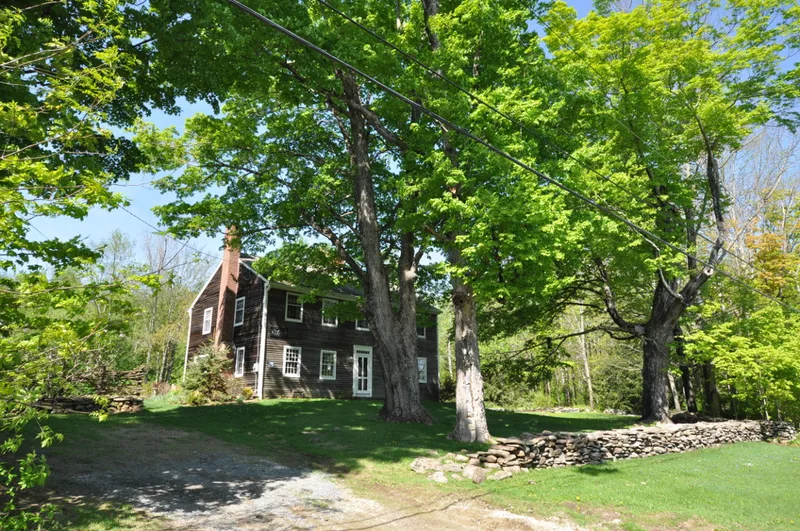
Four farmhouses line Washington Mountain Road on a terrace of the southern slope of Washington Mountain, at about 1,600 feet. They are the surviving core of the earliest residential settlement in Washington, Massachusetts, known as Milliken's Corner. The William Milliken Farm, built soon after a 1763 land grant to one of the town's first ten proprietors, is the only Colonial-period building left in the town. Three Federal-period houses followed by about 1803: the Hiram Savery House, the Richmond-Foster-Corey House and the Clark-Strong-Abbott-Pomeroy House. Farming on the rocky land was difficult and stayed at subsistence level. When the County Road opened in 1830 and a railroad was built later in the century, both east of the mountain, development moved east and the settlement stopped growing. That lack of growth left a modest linear pattern of farms that most hilltowns lost. The district was listed for its local significance in settlement history and early architecture.
Machine-generated summary. This summary was generated by a language model from the official nomination document and has not been reviewed line by line by an editor. It may contain errors. Check the source document before relying on any detail. Source: nomination document (PDF) · catalog entry. Generated October 2026 (model claude-sonnet-5-5, prompt v1.0-2026-10-29).
| Period of significance | ca. 1765-1803 |
|---|---|
| Styles | Georgian and Federal |
| Areas of significance | Agriculture, Exploration/Settlement, Architecture |
| Acreage | 130 |
| Boundary source | NPS cultural-resource GIS polygon |
| Full listing page | Lower Historic District (property record) |
What listing means for this property
This is a historic district. Buildings within its boundary are either contributing (they add to the district's significance) or non-contributing. Owners of contributing income-producing buildings can claim the 20% federal rehabilitation tax credit; homeowners should look at state credits. National Register districts impose no design review by themselves; a local historic district ordinance, if one exists, does (the difference explained).
General information, not legal or tax advice. Rules change; confirm with your State Historic Preservation Office or a qualified adviser.