Lowell Locks and Canals Historic District

Why it's listed
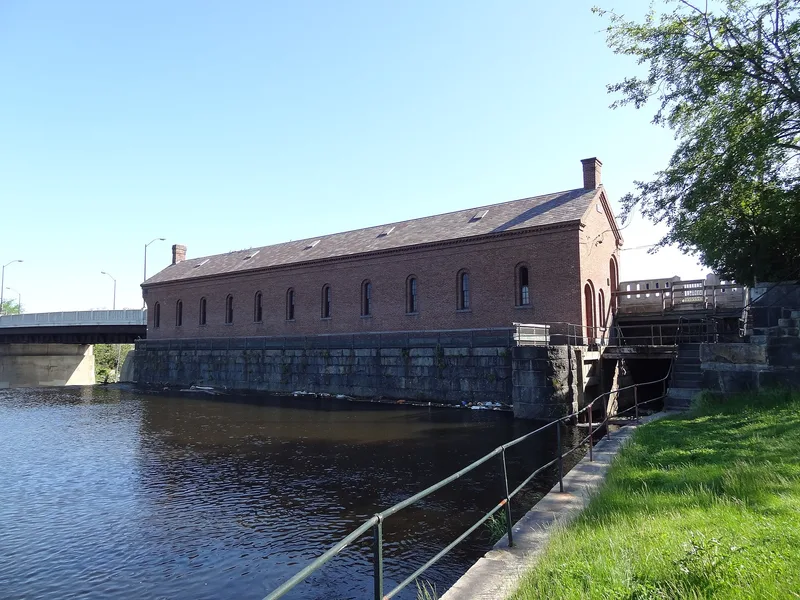
Lowell's canal system, built between 1793 and 1848, forms a district of about 100 acres along roughly five miles of waterways. It includes the Pawtucket Canal, the Northern Canal, the Pawtucket Dam, locks, gatehouses, millyards such as Suffolk, Boott, Hamilton and Lawrence, and three workers' boarding houses. The canals began as a navigation route around Pawtucket Falls, opened in 1796, then were expanded to carry water power to textile mills. Each new canal was built to solve the problem of supplying every mill with enough power, and the Northern Canal finally balanced the flow. The nomination holds that this work, led by engineers including James Francis and George Whistler, drew international attention. It also points to the corporate boarding house system as a widely studied social model. Lowell's population grew from about 200 in 1822 to over 33,000 in 1850. After textile companies moved south, many buildings emptied and deteriorated, and state and federal efforts to restore the area were beginning.
Machine-generated summary. This summary was generated by a language model from the official nomination document and has not been reviewed line by line by an editor. It may contain errors. Check the source document before relying on any detail. Source: nomination document (PDF) · catalog entry. Generated October 2026 (model claude-sonnet-5-5, prompt v1.0-2026-10-29).
| Period of significance | 1790-1870 |
|---|---|
| Styles | Romanesque Revival, with Federal, Greek Revival, Italianate, Queen Anne and High Victorian Gothic elements |
| Areas of significance | Engineering, Industry |
| Acreage | 125 |
| Boundary source | NPS cultural-resource GIS polygon |
| Full listing page | Lowell Locks and Canals Historic District (property record) |
What listing means for this property
This is a historic district. Buildings within its boundary are either contributing (they add to the district's significance) or non-contributing. Owners of contributing income-producing buildings can claim the 20% federal rehabilitation tax credit; homeowners should look at state credits. National Register districts impose no design review by themselves; a local historic district ordinance, if one exists, does (the difference explained).
General information, not legal or tax advice. Rules change; confirm with your State Historic Preservation Office or a qualified adviser.