Liberty Tree District

The National Park Service has not published a boundary polygon for this district; the map shows the listed properties inside it and the district's reference point.
Why it's listed
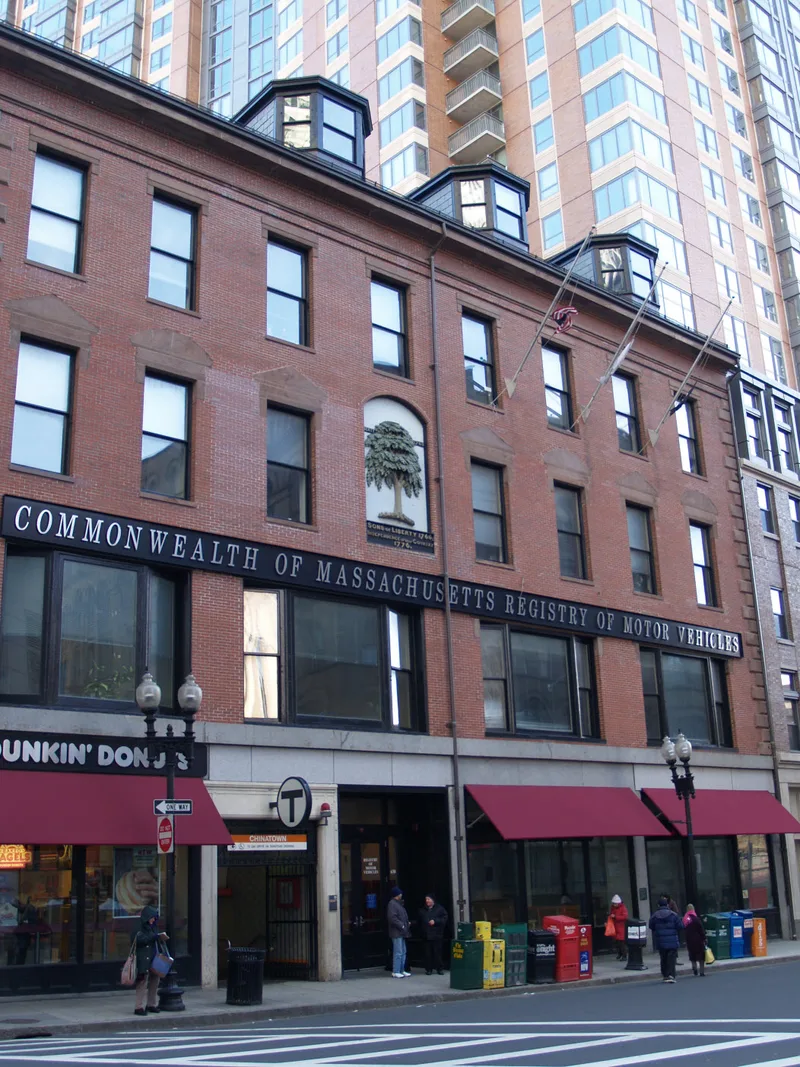
Six commercial buildings gather around the corner of Washington and Essex Streets in Boston, on ground once known as Hanover Square. This corner held the Liberty Tree Tavern and the great elm called the Liberty Tree, where the Sons of Liberty met after forming in 1765 to protest the Stamp Act. A carved relief plaque on the 1850 Liberty Tree Block, a brick Greek Revival and Italianate building, commemorates the tree. Nearby buildings show how the area developed as a commercial and travel district in the later 19th century. They include the Essex Hotel of about 1881, a polychrome High Victorian Gothic mercantile building of 1875, and a Federal Revival hotel facade at 640-644 Washington Street that grew from an 1824 hotel named for Lafayette. One building of about 1871 at 11-13 Essex Street has a wooden facade carved to imitate cast iron, and is the only one of its kind in the city's central business district.
Machine-generated summary. This summary was generated by a language model from the official nomination document and has not been reviewed line by line by an editor. It may contain errors. Check the source document before relying on any detail. Source: nomination document (PDF) · catalog entry. Generated October 2026 (model claude-sonnet-5-5, prompt v1.0-2026-10-29).
| Period of significance | 1850-1900 |
|---|---|
| Styles | Greek Revival/Italianate, High Victorian Gothic, Federal Revival |
| Areas of significance | Architecture, Performing Arts |
| Acreage | 0.6 |
| Boundary source | not published |
| Full listing page | Liberty Tree District (property record) |
What listing means for this property
This is a historic district. Buildings within its boundary are either contributing (they add to the district's significance) or non-contributing. Owners of contributing income-producing buildings can claim the 20% federal rehabilitation tax credit; homeowners should look at state credits. National Register districts impose no design review by themselves; a local historic district ordinance, if one exists, does (the difference explained).
General information, not legal or tax advice. Rules change; confirm with your State Historic Preservation Office or a qualified adviser.