Lasell Neighborhood Historic District

Why it's listed
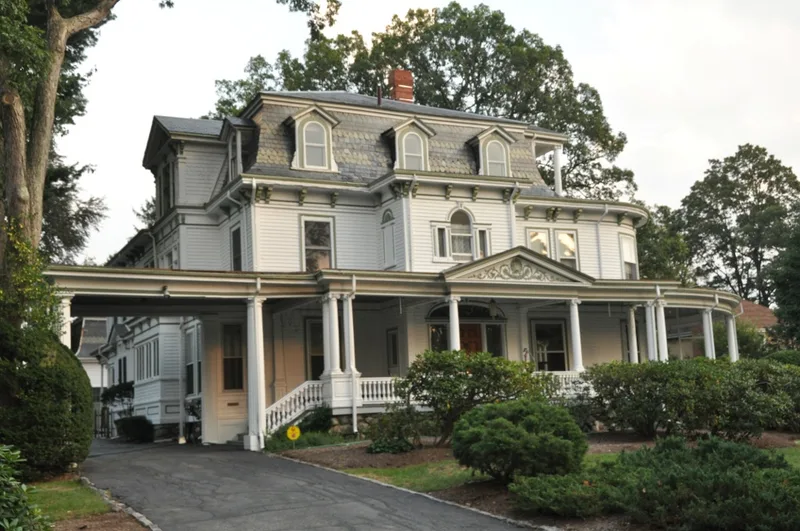
Lasell Neighborhood Historic District covers about 50 acres in Auburndale, in western Newton, Massachusetts. It is made up mainly of houses built between the mid- and late 1800s, along with a few buildings of Lasell Junior College. The area grew after railroad service reached the village in the 1830s and 1850s, when land south of the tracks was developed by local investors. Some of those investors also backed the Auburndale Female Seminary, which opened in 1851 and later became the college. Over time the school bought nearby houses for dormitories and classrooms. The district shows many styles of the period, including Italianate, Mansard, Queen Anne, Colonial Revival, Shingle and Georgian Revival. Its best-known building is the Winslow-Haskell mansion, called The Castle, a Victorian Gothic residence built in 1870 and already listed separately. The district was listed because of the seminary's influence on the village and because the buildings form a cohesive group of the area's typical architecture.
Machine-generated summary. This summary was generated by a language model from the official nomination document and has not been reviewed line by line by an editor. It may contain errors. Check the source document before relying on any detail. Source: nomination document (PDF) · catalog entry. Generated October 2026 (model claude-sonnet-5-5, prompt v1.0-2026-10-29).
| Styles | Italianate, Mansard, Queen Anne, Colonial Revival, Victorian Gothic, Shingle, Georgian Revival and Stick |
|---|---|
| Areas of significance | Education, Architecture |
| Acreage | 50.5 |
| Boundary source | NPS cultural-resource GIS polygon |
| Full listing page | Lasell Neighborhood Historic District (property record) |
What listing means for this property
This is a historic district. Buildings within its boundary are either contributing (they add to the district's significance) or non-contributing. Owners of contributing income-producing buildings can claim the 20% federal rehabilitation tax credit; homeowners should look at state credits. National Register districts impose no design review by themselves; a local historic district ordinance, if one exists, does (the difference explained).
General information, not legal or tax advice. Rules change; confirm with your State Historic Preservation Office or a qualified adviser.