Indian Hill-North Village

Why it's listed
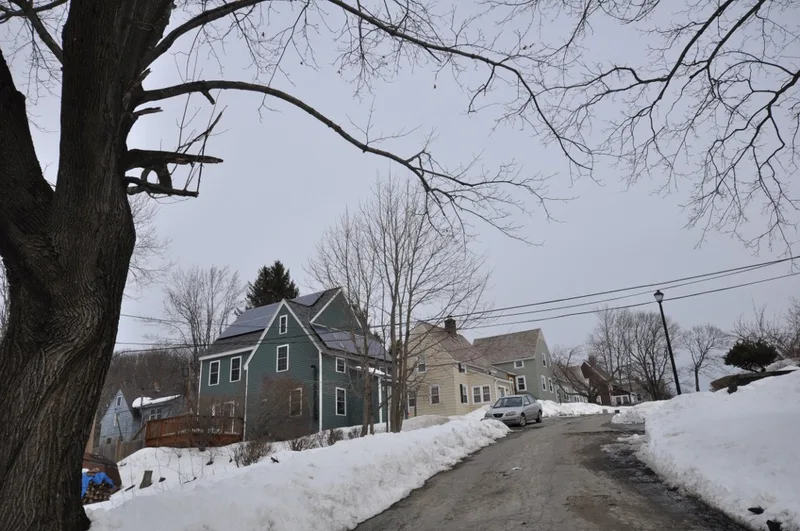
Indian Hill-North Village is a planned neighborhood of workers' cottages on the north slope of Indian Hill in Worcester. Built around 1916-1918 for the Norton Company, the city's largest employer, it grew from the company's effort to create an industrial village where employees could own their homes. About ninety-four houses were built quickly, with cellar holes reportedly dynamited for speed. The layout is nearly symmetrical and trapezoidal, organized around a broad tree-lined parkway crossed by Watt and Heroult Roads. Most buildings are simple one-and-one-half-storey cottages with steeply pitched slate roofs, clapboard first floors and shingled upper floors. Two larger buildings on Watt Road once held a community store and a community hall. Four ranch houses built after 1960 do not contribute to the district's character. The village is significant because company-owned workers' housing was otherwise virtually absent in Worcester, and the project reflected an early local commitment to community planning and healthful living conditions.
Machine-generated summary. This summary was generated by a language model from the official nomination document and has not been reviewed line by line by an editor. It may contain errors. Check the source document before relying on any detail. Source: nomination document (PDF) · catalog entry. Generated October 2026 (model claude-sonnet-5-5, prompt v1.0-2026-10-29).
| Period of significance | ca. 1916-1918 |
|---|---|
| Styles | Astylistic cottages |
| Areas of significance | Community Planning and Development |
| Acreage | 11 |
| Boundary source | NPS cultural-resource GIS polygon |
| Full listing page | Indian Hill-North Village (property record) |
What listing means for this property
This is a historic district. Buildings within its boundary are either contributing (they add to the district's significance) or non-contributing. Owners of contributing income-producing buildings can claim the 20% federal rehabilitation tax credit; homeowners should look at state credits. National Register districts impose no design review by themselves; a local historic district ordinance, if one exists, does (the difference explained).
General information, not legal or tax advice. Rules change; confirm with your State Historic Preservation Office or a qualified adviser.