Hyannis Road Historic District

Why it's listed
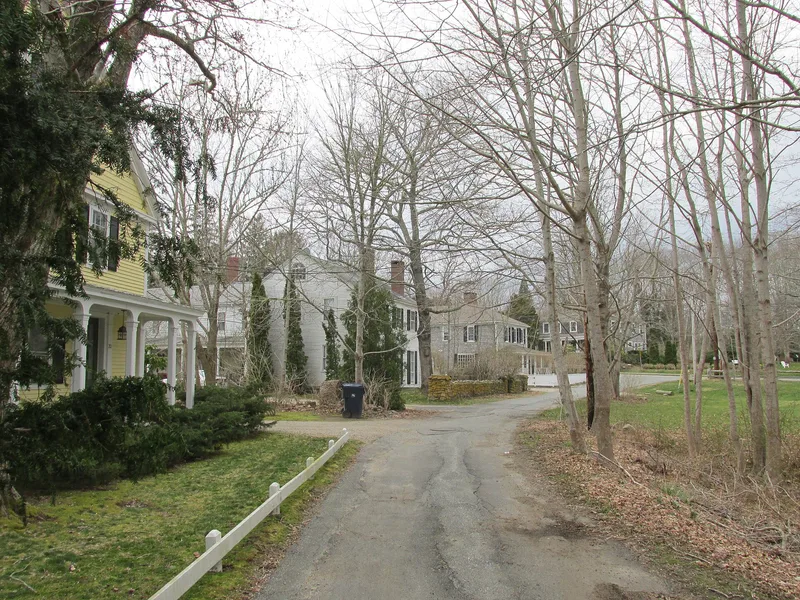
Ten wood-frame houses along Hyannis Road and Bow Lane make up this small district in Barnstable Village, Massachusetts. Built between about 1790 and 1855, the homes are mostly Federal and Greek Revival in style, and together they form a cohesive streetscape bounded by County Road on the north and the former Cape Cod Branch Railroad tracks on the south. Hyannis Road, once called Baker's Lane, became the main connector between Barnstable Village and the growing village of Hyannis, and the houses reflect that role. Residents included merchants, mariners, blacksmiths and housewrights, along with a county sheriff, a state senator and a judge who served as District Attorney and state Attorney General. Later owners included town historian Donald G. Trayser. Examples range from the c1790 Deacon Timothy Phinney House, with its attached barn, to the Greek Revival Doggett House of about 1855. The district is significant for its architecture, its prominent residents and its place in the village's development.
Machine-generated summary. This summary was generated by a language model from the official nomination document and has not been reviewed line by line by an editor. It may contain errors. Check the source document before relying on any detail. Source: nomination document (PDF) · catalog entry. Generated October 2026 (model claude-sonnet-5-5, prompt v1.0-2026-10-29).
| Styles | Federal and Greek Revival (with some Colonial Revival additions) |
|---|---|
| Areas of significance | Exploration/Settlement, Architecture, Social History |
| Acreage | 10 |
| Boundary source | NPS cultural-resource GIS polygon |
| Full listing page | Hyannis Road Historic District (property record) |
What listing means for this property
This is a historic district. Buildings within its boundary are either contributing (they add to the district's significance) or non-contributing. Owners of contributing income-producing buildings can claim the 20% federal rehabilitation tax credit; homeowners should look at state credits. National Register districts impose no design review by themselves; a local historic district ordinance, if one exists, does (the difference explained).
General information, not legal or tax advice. Rules change; confirm with your State Historic Preservation Office or a qualified adviser.