Hubbard-French District

The National Park Service has not published a boundary polygon for this district; the map shows the listed properties inside it and the district's reference point.
Why it's listed
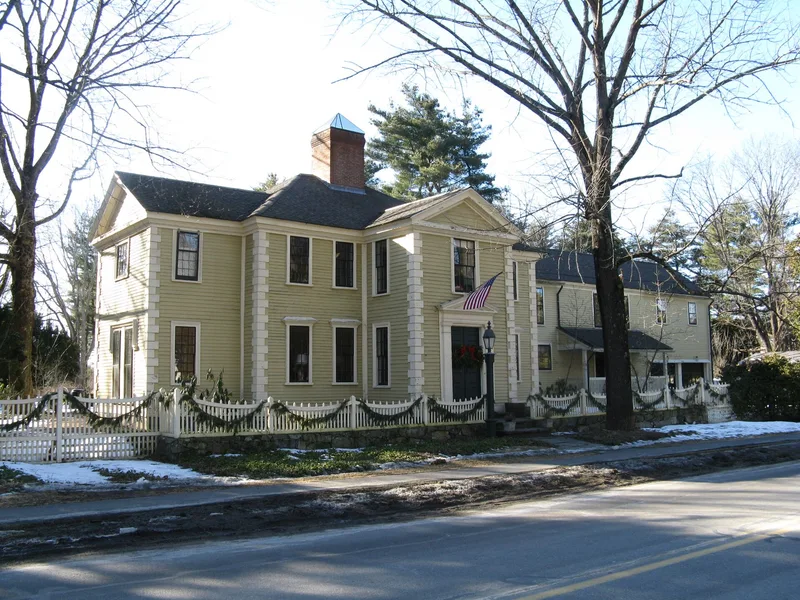
Set on Sudbury Road in Concord, this small district preserves part of a farm that shaped the Hubbardville neighborhood from the late eighteenth century into the early twentieth. Its centerpiece is a hip-roofed Georgian farmhouse built in 1787-88 for Thomas Hubbard Jr., with quoins, a dentiled cornice and paneled interiors. Next door stands the 1879 Queen Anne studio of sculptor Daniel Chester French, whose father, Judge Henry French, bought the farm and updated the house. The Judge also planted rows of Centennial Pines in 1875. Later owner Mary Ogden Abbott added a long north wing, a picket fence and garden sculpture in the twentieth century. A granite and fieldstone root cellar, with iron reliefs made by the young French on its door, is the earliest known outbuilding. The district was listed because of its link to French, one of the leading American public sculptors, and for its layered architecture and landscape.
Machine-generated summary. This summary was generated by a language model from the official nomination document and has not been reviewed line by line by an editor. It may contain errors. Check the source document before relying on any detail. Source: nomination document (PDF) · catalog entry. Generated October 2026 (model claude-sonnet-5-5, prompt v1.0-2026-10-29).
| Styles | Colonial: Georgian; Late Victorian: Queen Anne |
|---|---|
| Areas of significance | Architecture, Agriculture, Community Planning and Development, Literature |
| Acreage | 3.4 |
| Boundary source | not published |
| Full listing page | Hubbard-French District (property record) |
What listing means for this property
This is a historic district. Buildings within its boundary are either contributing (they add to the district's significance) or non-contributing. Owners of contributing income-producing buildings can claim the 20% federal rehabilitation tax credit; homeowners should look at state credits. National Register districts impose no design review by themselves; a local historic district ordinance, if one exists, does (the difference explained).
General information, not legal or tax advice. Rules change; confirm with your State Historic Preservation Office or a qualified adviser.